IV Catheters & Patient Comfort — Operator Playbook for Clinics
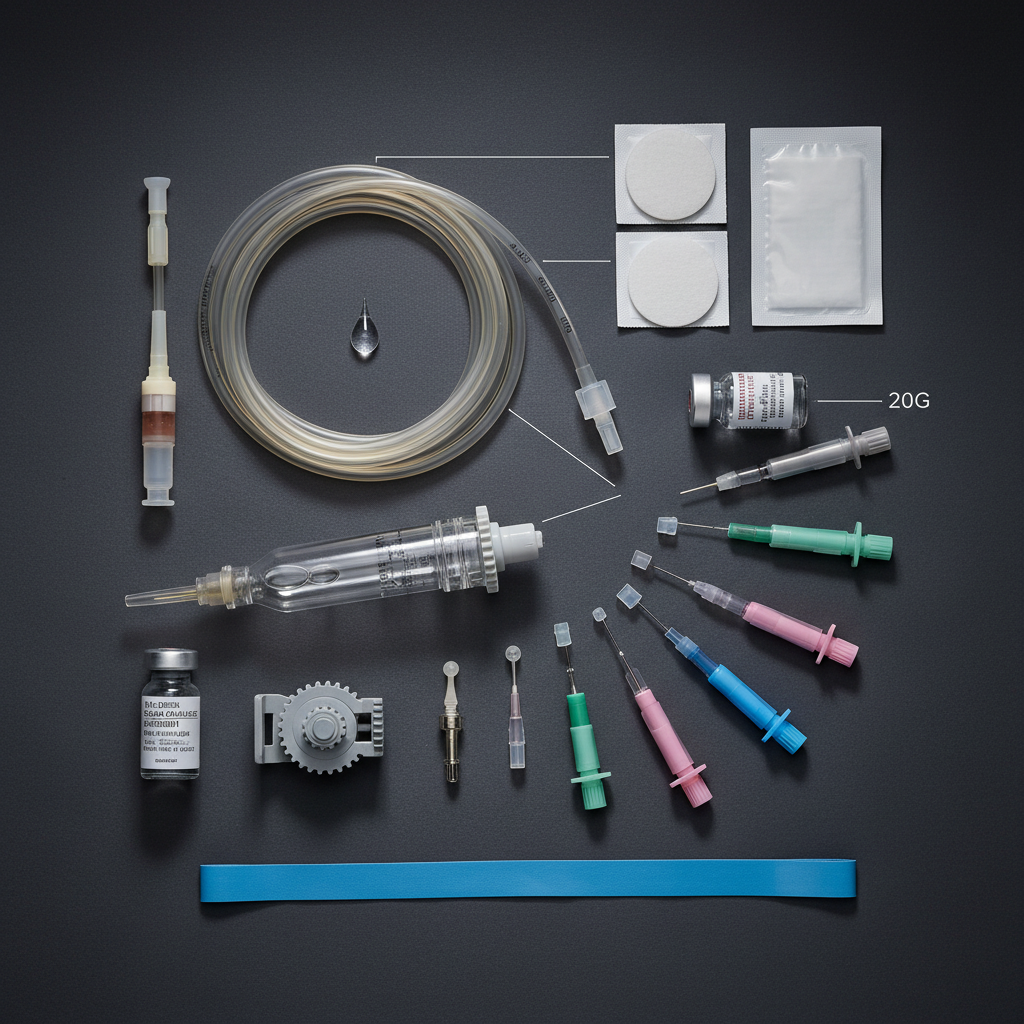
The best IV catheters for patient comfort are selected with a criteria scorecard—gauge matched to protocol and vein assessment, low-friction insertion technique per facility SOP, compatible securement, and consistent prep/flush supplies—not a ranked “#1 catheter” list. Clinics reduce start anxiety with process discipline more than with any single SKU.
Explicit scope: This article is educational for clinic staff operating under a medical director. It is not medical advice and not a substitute for nursing protocols, manufacturer IFUs, or state scope-of-practice rules. Gauge, antiseptic, tourniquet, flush, and sharps practices below are process-level only—lock numbers and device claims to your facility SOP and manufacturer IFUs (see Sources / Publish notes).
Audience = mobile IV / infusion clinic operators and procurement leads—not consumers shopping for drips near them.
Scorecard: choosing catheters for comfort (no #1 ranking)
- Criterion: Gauge options in stock · What “good” looks like: At least two gauges covering typical adult peripheral starts per medical-director policy · Fail mode: Only one gauge; staff force-fit every patient
- Criterion: Insertion characteristics · What “good” looks like: Staff trained on facility-approved devices; IFU followed · Fail mode: Switching brands mid-shift without competency
- Criterion: Securement compatibility · What “good” looks like: Dressing/securement matched to catheter platform · Fail mode: Tape-only workarounds that migrate
- Criterion: Prep / antiseptic stock · What “good” looks like: Alcohol and/or CHX options per policy · Fail mode: Prep stockouts → delayed starts
- Criterion: Flush pathway · What “good” looks like: Flush products gated and stocked correctly · Fail mode: Empty flush drawer mid-route
- Criterion: Account clarity · What “good” looks like: Catheters/prep usually supplies; flushes confirm Rx · Fail mode: Mixed PO stalls
Score USA MedPremium, large national wholesalers, and other specialty distributors with the same rows—no default “best brand” claim.
Operator playbook: comfort levers clinics control
Comfort is mostly process + supply continuity. Keep language operational; validate clinical technique claims with medical director / educator before printing as SOP.
1) Gauge selection education (general)
- Stock the gauge range your medical director approves for typical peripheral starts in your population.
- Smaller gauges (higher gauge number) are often preferred for comfort when flow needs allow—follow INS / facility vascular access guidelines approved by your medical director before asserting comfort or flow outcomes.
- Larger gauges may be required for higher flow or specific protocols—use protocol-specific flow guidance from your medical director, not distributor marketing.
- Document which gauges ride in mobile kits vs base stockroom.
Do not let procurement pick gauges from social-media “pain rankings.” Use competency-based selection under clinical leadership.
2) Site prep
- Alcohol and/or CHX prep pads/swabs per facility infection-prevention policy.
- Allow antiseptic to dry per IFU / facility SOP before insertion (use CDC or facility dry-time references in staff SOP).
- Stock allergy-aware alternatives if policy requires.
- Soft plug opportunity: prep pads and related IV Therapy category items on a supplies account (confirm SKU).
3) Tourniquet technique (high-level)
- Use clean, facility-approved tourniquets; replace soiled or porous reusable styles per policy.
- Time-on-arm limits belong in nursing SOP—cite facility / professional society tourniquet duration guidance; do not invent seconds in marketing.
- Procurement: stock enough single-use tourniquets for peak appointment days so staff do not reuse against policy.
4) Flush and line readiness
- Prefilled saline flushes: confirm Rx vs supplies gating per SKU—do not assume “syringe = supplies.”
- Match flush volume and technique to medical-director / facility protocol and the manufacturer flush IFU.
- Keep flush products in a labeled bin separate from open supplies if gated as Rx.
5) Catheter material and device features
- Follow manufacturer IFU for material, insertion length, and safety-engineered sharps features.
- Safety catheters and needlestick-prevention devices may be required by facility policy—align with OSHA / facility bloodborne pathogen program requirements.
- Do not claim a polymer or coating “eliminates pain” in marketing or staff scripts without manufacturer IFU or primary evidence—omit the claim if you cannot cite it.
6) Communication and environment (ops, not clinical claims)
- Predictable kit layout reduces fumbling time (patient-facing calm).
- Temperature-appropriate blankets / underpads if stocked as operational comfort items.
- Staff scripts belong to clinical leadership—not a wholesaler blog.
Supply list: peripheral start comfort kit
Use as a materials worksheet (adjust to medical-director formulary):
- Category: Access · Typical items: Peripheral IV catheters (approved gauges) · Usually supplies account?: Usually yes · Notes: Stock ≥2 gauges if policy allows
- Category: Venous prep ops · Typical items: Tourniquets · Usually supplies account?: Usually yes · Notes: Prefer policy-compliant single-use where required
- Category: Skin prep · Typical items: Alcohol / CHX swabs or pads · Usually supplies account?: Usually yes · Notes: Dry-time per SOP
- Category: Securement · Typical items: Stabilization devices, transparent dressings, tape · Usually supplies account?: Usually yes · Notes: Match catheter platform
- Category: Flush pathway · Typical items: Prefilled saline flushes · Usually supplies account?: Confirm gating · Notes: Label Rx bin if needed
- Category: PPE · Typical items: Nitrile exam gloves (size mix) · Usually supplies account?: Usually yes · Notes: See gloves wholesale guide
- Category: Sharps · Typical items: Sharps container sized to volume · Usually supplies account?: Usually yes · Notes: Mobile: transport-compliant containers
- Category: Comfort ops · Typical items: Gauze, underpads, emesis basins · Usually supplies account?: Usually yes · Notes: Operational, not outcome claim
- Category: Backup · Typical items: Extra catheters + prep in sealed pouch · Usually supplies account?: Usually yes · Notes: Mid-route failure buffer
Soft product plugs (honest, no outcome overclaim)
- IV Therapy category — catheters, sets, prep adjacency
- /explore — broader medical supplies catalog
- Exam gloves and prep often clear on a supplies account; confirm each SKU
- Fluids (if part of the same PO): Q8000 / Q8001 — may be Rx-gated; confirm product page
USA MedPremium (21068 Sheridan St, Fort Lauderdale, FL 33332) can support the non-controlled supplies layer. Score fill rate and SKU clarity alongside large national wholesalers—without “#1 catheter” claims. Prescription wholesale, where applicable, is limited to credentialed buyers in licensed states (see our current licensed states). No DEA controlled-substance pathway is implied.
Par tips for comfort-critical SKUs
- Track failed starts and mid-kit catheter changes—those drive burn more than scheduled appointments alone.
- Standardize one catheter family per competency cohort when clinically approved.
- Keep mobile pouch par separate from closet par.
- Never let flush or prep hit zero on a VIP or high-volume day—those stockouts feel like “painful service” to patients even when the catheter is fine.
Receiving and competency notes (procurement + clinical ops)
Procurement owns packaging integrity; clinical education owns device competency. Keep the split visible:
- Receiving: Reject catheters with breached sterile packaging; log lot/expiry on first open of case; quarantine recalled lots per facility policy.
- Competency: Do not introduce a new catheter brand on a VIP route day without medical-director-approved training.
- Variance control: One primary catheter family per trained cohort reduces insertion variance that patients experience as “pain.”
- Allergy / latex: Prefer latex-free tourniquets and gloves in the start kit if policy requires; document substitutions.
- Mobile pouch audit: Weekly count of gauges, prep, and flush prevents the silent stockout that forces extra sticks.
These steps support comfort operationally without claiming a specific clinical outcome percentage.
CTA: https://usamedpremium.com/custom-tiers/apply?start=1
Apply for a wholesale accountFrequently Asked Questions
Related reading:
- IV Sets, Tubing & Catheters Guide
- The 2026 IV Therapy Sourcing Playbook
- Mobile IV Therapy Clinic Supply Checklist
- Infusion Center Supply Checklist
Sources
- FDA — Medical Gloves (PPE context for start kits)
- CDC — Isolation Precautions Guideline hub
- FDA — DSCSA overview (Rx flush/fluid gating context)
- USA MedPremium — Pharmaceutical licensing
- BBB — USA MedPremium
- Disclaimer: USA MedPremium is a licensed medical supply and pharmaceutical distributor. This article is educational B2B guidance only—not legal, regulatory, medical, or pharmacy advice. Independently verify licensing, credentialing, product classification, and ship-to rules with qualified counsel, your state boards, and primary-source regulators. Product-level gating in the catalog controls what you can order—not this article. USA MedPremium does not sell ketamine or any DEA controlled substances.