IV Administration Sets: The Complete Systems Guide to Tubing, Catheters, and Configuration Strategy
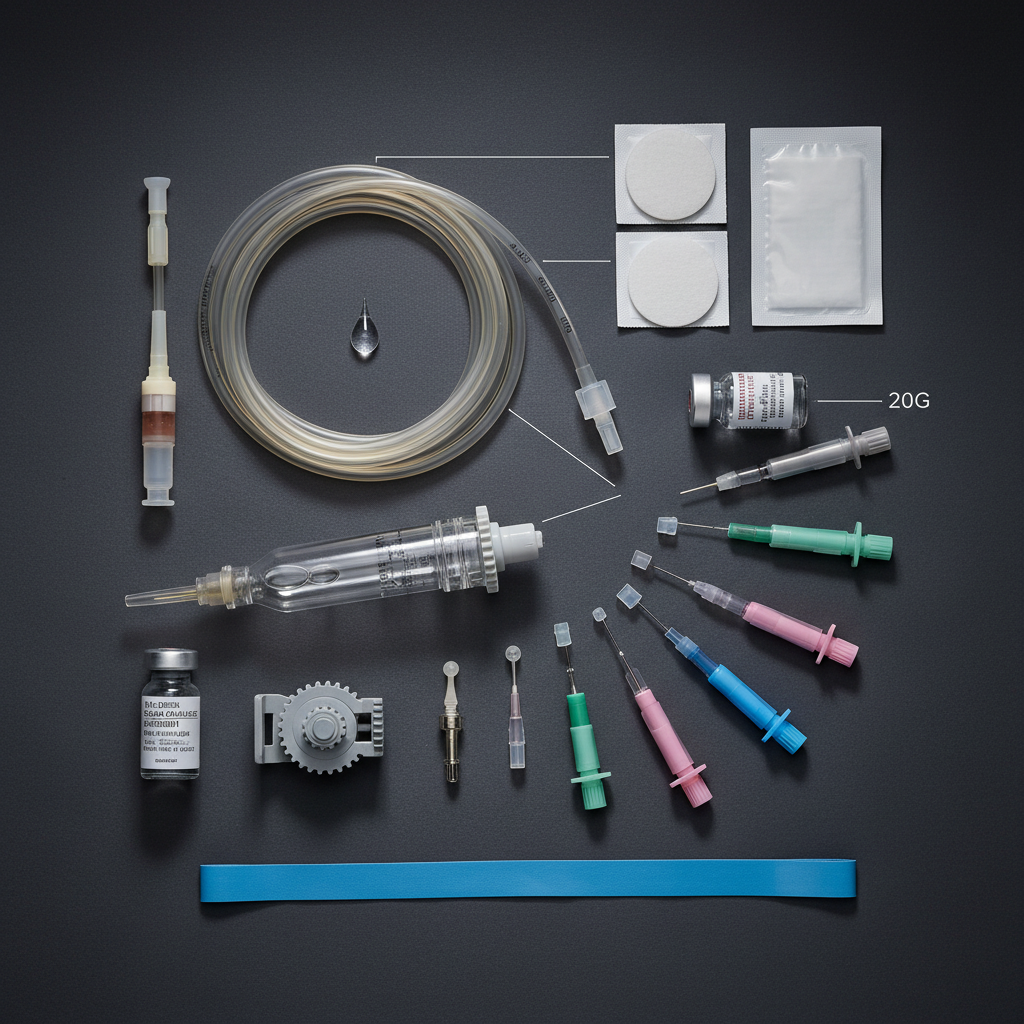
Takeaways:
- Select IV components as a matched system — not individually — to eliminate compatibility failures at the bedside.
- Every tubing SKU must be verified against your specific infusion pump model before procurement.
- Drip factor, catheter gauge, and connector type must match your patient population and clinical setting.
- DEHP-free bags paired with PVC tubing may not achieve the safety objective — verify the full fluid path.
- Tubing change intervals directly affect consumption rates — calculate par levels based on actual INS-compliant change frequency.
- Dual-source every critical IV category and maintain 2-3 weeks of par stock to weather shortage periods.
Think Systems, Not Individual Products
A nurse reaches for an IV administration set, hangs a new bag, and the spike does not match the port. The drip chamber is the wrong factor for the pump. The catheter gauge cannot handle the flow rate. These are not rare events — they are daily friction points in facilities that select IV therapy supplies component by component instead of as a matched system.
That systems-thinking approach is the central thesis of this guide and the single most important concept for any facility manager or clinical lead responsible for IV supply procurement.
The INS Infusion Therapy Standards of Practice, updated in 2024, reinforce this principle. IV therapy is not about choosing the right catheter or the right tubing in isolation. It is about selecting components where every piece is compatible with the patient’s treatment plan, the infusion pump in use, and the clinical setting.
The ASHP reports that sterile injectable shortages have persisted for over a decade, with IV fluid supply disruptions affecting over 80% of U.S. hospitals during peak shortage periods. Tariffs on imported medical devices add further pricing pressure.
When components are selected as a system, compatibility failures drop, clinical staff spend less time troubleshooting, and patients receive therapy without preventable delays.
This guide walks through each component, explains how they interact, and provides a practical framework for building an IV configuration strategy that eliminates the daily scramble.
IV Administration Sets: From Spike to Connector
An IV administration set is the tubing system that connects a fluid bag to the patient’s catheter. It is the backbone of every infusion. Understanding its components and the difference between gravity and pump compatibility is essential for selecting the right IV administration sets for your facility.
Spike and Drip Chamber
Every administration set starts with the spike — a rigid plastic point that punctures the bag port to access the fluid. Spike designs vary by manufacturer, and not all spikes fit all bag ports. This is one of the most common and most preventable compatibility failures in IV supply chains.
Below the spike sits the drip chamber. This transparent reservoir serves two purposes: it allows clinicians to visually confirm fluid flow, and it prevents air from entering the tubing.
Understanding Drip Factor
Drip factor defines how many drops equal one milliliter of fluid. It directly affects flow rate calculations and clinical workflow.
- Macrodrip (10 gtt/mL): 10
- Macrodrip (15 gtt/mL): 15
- Macrodrip (20 gtt/mL): 20
- Microdrip (60 gtt/mL): 60
Stocking the wrong drip factor for your patient mix forces nurses to perform manual flow rate recalculations on every infusion. Pediatric and critical care settings require microdrip sets for precision. General hydration and routine medication delivery can use macrodrip. Match your drip factor inventory to your actual patient population.
Gravity vs. Pump Compatibility
IV administration sets fall into two main categories based on flow control method.
Gravity sets rely on the height of the bag above the patient and a roller clamp to control flow. They are simpler, less expensive, and adequate for routine hydration and basic medication delivery where precise flow rates are not critical.
Pump sets (infusion pump tubing) are engineered for electronic infusion pumps that deliver exact flow rates. This precision is essential for chemotherapy, total parenteral nutrition (TPN), vasopressors, and any medication where dosing accuracy affects patient safety.
- Flow control: Roller clamp + gravity
- Precision: Approximate (manual adjustment)
- Cost per set: Lower
- Required for: Routine hydration, basic meds
- Key constraint: None
Compatibility alert: If your facility uses infusion pumps, every tubing SKU must be verified against your specific pump model. This is the single most common IV administration sets sourcing mistake — ordering tubing that physically does not fit the pump.
- Pump manufacturers publish compatibility lists. Check them before every procurement decision.
Primary vs. Secondary (Piggyback) IV Tubing
Understanding the difference between primary and secondary IV tubing is fundamental to how infusion systems are configured at the bedside.
Primary IV Tubing
Primary IV tubing is the main administration set that runs directly from the fluid bag to the patient’s vascular access device. It includes the full component chain: spike, drip chamber, roller clamp, injection ports, and Luer connector. Primary tubing is longer (typically 60-110 inches) to accommodate bed-to-pole distance.
Secondary IV Tubing
Secondary IV tubing — often called piggyback tubing — is a shorter set (typically 30-40 inches) that connects a secondary medication bag to the primary line via a Y-site injection port. It allows clinicians to deliver intermittent medications (antibiotics, for example) without disconnecting the primary infusion.
Secondary sets piggyback onto the primary line. The secondary bag is hung higher than the primary bag so gravity directs the secondary medication first. When the secondary bag empties, the primary infusion resumes automatically.
- Length: 60-110 inches
- Connection: Bag to patient (full set)
- Use: Continuous infusion
- Components: Full (spike, chamber, clamps, ports)
Facilities that stock both primary and secondary tubing from the same manufacturer reduce connector mismatch issues at the Y-site. This is another IV tubing compatibility consideration that belongs in your system-level procurement decisions.
Vented vs. Non-Vented Administration Sets
This distinction matters based on the type of IV container your facility uses.
When to Use Vented Sets
Vented IV administration sets include an air vent in the spike that allows air to enter the container as fluid flows out. They are required for glass bottles and semi-rigid containers that do not collapse as fluid drains. Without the vent, a vacuum forms and flow stops.
When to Use Non-Vented Sets
Non-vented sets are used with flexible plastic IV bags that collapse as fluid is delivered, eliminating the need for air displacement. The vast majority of modern IV solutions ship in flexible bags, making non-vented sets the default in most facilities.
Practical rule: If your facility uses flexible plastic bags for nearly all infusions (most do), stock non-vented sets as your primary administration sets. Keep a small inventory of vented sets for any glass-bottle medications you still use, such as certain nitroglycerin formulations or albumin products.
Luer Lock vs. Luer Slip Connectors
The connector at the end of your IV administration set determines how it attaches to the catheter hub or extension set. This is a critical IV tubing compatibility decision.
Luer Lock Connectors
Luer lock connectors use a threaded collar that screws onto the catheter hub, creating a secure mechanical connection. They are the preferred choice for:
- High-pressure infusions (power injectors for contrast media)
- Ambulatory patients who move frequently
- Any line where accidental disconnection poses a safety risk
- Pump-driven infusions
Luer Slip Connectors
Luer slip connectors use friction fit — a tapered tip that pushes into the catheter hub without threading. They offer faster connect/disconnect but less security.
- Connection method: Threaded collar (screw-on)
- Security: High — resists accidental disconnect
- Speed: Slower to connect
- Best for: Pumps, ambulatory, high-pressure
- ISO standard: ISO 80369 series
Most facilities standardize on Luer lock for pump-driven and critical infusions, and maintain Luer slip inventory for routine gravity lines where quick access is prioritized.
Extension Sets, Needleless Connectors, and Line Accessories
Beyond the primary IV administration set, several accessories complete the infusion system and affect both patient safety and workflow efficiency.
Extension Sets
Extension sets add length and flexibility between the catheter hub and the administration set. They serve three purposes: reducing direct manipulation of the catheter (which decreases dislodgement risk), providing additional injection ports for medication access, and allowing clinicians to change administration sets without disturbing the catheter site.
Needleless Connectors
Needleless connectors (also called closed-system connectors) replace traditional needle-accessed injection ports. They reduce needlestick injury risk and support infection control by creating a sealed system. The INS 2024 Standards recommend needleless connectors on all vascular access devices.
Two main designs exist:
- Positive displacement connectors flush fluid forward when disconnected, reducing blood reflux into the catheter
- Neutral displacement connectors maintain fluid equilibrium during connection and disconnection
Stopcocks and Manifolds
Multi-lumen stopcocks allow clinicians to manage multiple infusion lines through a single catheter. They are common in critical care settings where patients receive several concurrent medications. Manifolds extend this capability to four or more lines.
Every accessory added to the line introduces a potential connection point and infection risk. The INS Standards emphasize minimizing add-on devices and using only what is clinically necessary.
- Source: INS Standards of Practice, 2024 revision
IV Catheters: Choosing the Right Gauge
The IV catheter is the component that enters the patient’s vein. Gauge selection directly determines flow rate, patient comfort, and complication risk. The INS 2024 Standards recommend selecting the smallest gauge that accommodates the prescribed therapy.
Gauge Selection by Clinical Setting
- 14G-16G: 200-300 mL/min
- 18G: mL/min
- 20G: mL/min
- 22G: mL/min
- 24G: mL/min
For outpatient infusion centers running biologics and hydration therapy: 20G and 22G IV catheters cover the vast majority of patients. Stock these as your primary gauges.
For surgery centers performing sedation and contrast infusions: 18G and 20G should be your primary stock. Keep 16G available for emergencies requiring rapid volume replacement.
For pediatric facilities: 22G and 24G are standard. The smaller gauges reduce patient discomfort and vein trauma in smaller veins.
The INS Standards also recommend limiting peripheral IV catheter insertion attempts to two per clinician to reduce vein damage and patient pain. This makes first-stick success critical — and first-stick success correlates with having the right IV catheter gauge available at the bedside when the clinician needs it.
Infusion Bags: Size, Material, and the DEHP Question
Your infusion bag selection depends on three factors: the solution being delivered, the volume the patient needs, and the material compatibility with the medication.
Standard Sizes
Standard IV bags come in 50 mL, 100 mL, 250 mL, 500 mL, and 1,000 mL volumes. Matching bag size to clinical protocol reduces waste and ensures dosing accuracy.
The DEHP Question
Traditional PVC bags contain DEHP (di-2-ethylhexyl phthalate), a plasticizer that can leach into certain medications. This is particularly concerning with lipid-based solutions, some chemotherapy drugs, and long-duration infusions.
The FDA has issued guidance on DEHP exposure concerns, specifically for vulnerable populations including neonates, pregnant patients, and those receiving long-term infusion therapy.
DEHP-free IV bags — made from polyolefin or other non-PVC materials — are increasingly the standard for:
- Oncology — chemotherapy drug interactions with PVC
- Pediatric and neonatal — higher vulnerability to plasticizer exposure
- TPN — lipid-based solutions that accelerate DEHP leaching
- Long-term infusion — cumulative exposure over extended treatment
Procurement note: Transitioning to DEHP-free bags does not require replacing your entire IV administration sets inventory. However, verify that your tubing is also DEHP-free if the clinical concern extends to the full fluid path. Some facilities maintain DEHP-free bags while using standard PVC tubing — this may not achieve the safety objective.
IV Start Kits: The Time-Saver Nobody Talks About
An IV start kit bundles everything a clinician needs to initiate peripheral IV access into a single sterile package: antiseptic prep pad, tourniquet, transparent dressing, securement device, gauze, tape, and sometimes a flush syringe.
Clinical Benefits Beyond Convenience
Standardized start kits reduce variability in site preparation. The INS 2024 Standards recommend consistent skin antisepsis before catheter insertion. When every insertion follows the same kit sequence, compliance with this standard becomes automatic rather than dependent on individual clinician practice.
Start kits also reduce the risk that preparation steps get skipped during high-volume shifts or emergency situations. When the tourniquet, prep pad, dressing, and securement are all in one package, the workflow is self-guiding.
Configuration Considerations
Not all IV start kits contain the same components. When selecting kits for your facility:
- Confirm the antiseptic matches your facility’s infection control protocol (chlorhexidine vs. povidone-iodine)
- Verify the transparent dressing size accommodates your most-used catheter gauges
- Check whether the kit includes a pre-filled flush syringe (reduces a separate stock item)
- Evaluate whether the securement device is compatible with your catheter brand
Tubing Change Frequency: What the INS Standards Require
How often IV administration set tubing should be changed is defined by clinical guidelines, not manufacturer preference. The INS 2024 Standards of Practice provide specific intervals based on infusion type.
- Continuous primary IV tubing: Every 96 hours (4 days)
- Intermittent secondary tubing: Every 24 hours
- Lipid-containing infusions (TPN): Every 24 hours
- Blood and blood products: Every 4 hours (or after each unit)
- Propofol infusions: Every 6-12 hours
Inventory impact: Tubing change intervals directly affect your IV administration sets consumption rate. A 20-bed unit running continuous infusions at 96-hour intervals consumes roughly 25% of the tubing that a 24-hour change protocol would require. Calculate your par levels based on actual change frequency, not estimated usage.
Facilities that track tubing change compliance often find that standardizing administration set brands reduces confusion about which tubing is on which schedule. When all your primary IV tubing comes from one manufacturer with consistent labeling, nurses can identify change timing at a glance.
How to Build Your IV Configuration Strategy
This is where systems thinking becomes operational. A configuration strategy transforms individual product decisions into an integrated IV supply chain that prevents compatibility failures, controls costs, and supports clinical workflows.
Step 1: Audit Your Current IV System
Map every IV-related product currently in use across your facility. This audit is the foundation of your configuration strategy.
- List every administration set SKU by department (primary, secondary, extension)
- Identify the infusion pump model(s) in use at each unit
- Verify tubing-to-pump compatibility for every SKU (check manufacturer compatibility lists)
- Document catheter gauges stocked by department
- Record IV bag sizes and materials (PVC vs. DEHP-free) by clinical application
- Identify all connectors in use (Luer lock vs. Luer slip, needleless connector brands)
- Note start kit contents and confirm antiseptic protocol alignment
- Flag any single-source products (only one manufacturer/supplier)
Step 2: Identify Compatibility Gaps
Cross-reference your audit findings. Common gaps include:
- Tubing SKUs that are not on the pump manufacturer’s approved list
- Departments stocking catheter gauges mismatched to their patient population
- Mixed Luer lock and Luer slip connectors creating confusion at the bedside
- DEHP-free bags paired with PVC tubing (defeating the purpose)
- Start kits with antiseptics that do not match infection control policy
Step 3: Standardize by Clinical Setting
Your infusion center does not need the same configuration as your surgical suites. Build department-specific par levels.
- Primary tubing: Pump-compatible, macrodrip (15-20 gtt)
- Secondary tubing: Standard piggyback
- Catheter gauges: 20G, 22G (primary); 18G (backup)
- Connectors: Luer lock
- IV bags: DEHP-free for biologics; standard for hydration
- Start kits: Chlorhexidine-based
Step 4: Establish a Decision Framework
When evaluating new IV administration sets or switching suppliers, apply these criteria in order:
- Pump compatibility — Does the tubing work with your infusion pumps? (Non-negotiable)
- Clinical appropriateness — Does the drip factor, gauge, or material match your patient population?
- System compatibility — Does the connector type match your existing lines and accessories?
- Regulatory compliance — Does the product meet FDA requirements and your facility’s standards?
- Supply reliability — Can the supplier maintain consistent availability? Is dual-sourcing possible?
- Cost — Only after the above criteria are satisfied
USA MedPremium works with facilities to map these configurations across departments. As a distributor sourcing from multiple manufacturers with full DSCSA compliance, we help clinical teams match IV therapy supplies to their specific pump models, patient populations, and formulary requirements — rather than defaulting to a single-manufacturer catalog that may not cover every clinical need.
Step 5: Schedule Quarterly Reviews
IV supply needs change. New pump acquisitions, patient population shifts, formulary additions, and manufacturer discontinuations all affect your configuration. Review your IV system quarterly against the audit checklist above. Update par levels and verify that every component still fits the system.
Supply Chain Resilience: Shortage Management and Dual-Sourcing
The IV supply chain has been under sustained pressure. The ASHP has documented ongoing sterile injectable shortages that directly affect IV fluid availability. Tariffs on imported medical devices add cost volatility. Facilities that rely on a single source for critical IV components are exposed to disruption.
GPO Strategy
Group Purchasing Organization (GPO) contracts provide negotiated pricing but can also limit flexibility. The most resilient IV supply chain strategy uses GPO contracts as a baseline while maintaining relationships with additional distributors who can fulfill during GPO allocation shortages.
Dual-Sourcing Best Practices
For every critical IV administration sets category, identify at least two qualified suppliers:
- Primary tubing — two pump-compatible sources verified against your pump models
- IV catheters — two manufacturers for your most-used gauges
- IV bags — two sources for your highest-volume solutions (0.9% NaCl, Lactated Ringer’s)
- Start kits — two suppliers with matching antiseptic protocols
Shortage management tip: Facilities that maintain par levels at 2-3 weeks of supply (rather than just-in-time minimums) for critical IV components weather shortage periods with less clinical disruption. This buffer requires more warehouse space and working capital but prevents the emergency spot-purchasing that drives up per-unit costs during shortages.
- Source: ASHP Guidelines on Managing Drug Shortages
Tariff and Cost Volatility
With tariffs affecting imported medical device pricing, consider the country of manufacture when evaluating IV administration sets suppliers. Domestic manufacturing or bonded-warehouse distribution can insulate your facility from sudden cost increases on imported tubing, catheters, and bags.
Build Your IV Configuration StrategyFrequently Asked Questions
- Disclaimer: This article is for informational and educational purposes only. It does not constitute medical advice. Always follow your facility’s clinical protocols and consult qualified healthcare professionals for patient care decisions.
- Disclosure: USA MedPremium is a national distributor of IV therapy supplies and medical products referenced in this article. All clinical recommendations are based on published standards and cited sources.