Infusion Center Supply Checklist — Fluids, Tubing, PPE & Account Gates
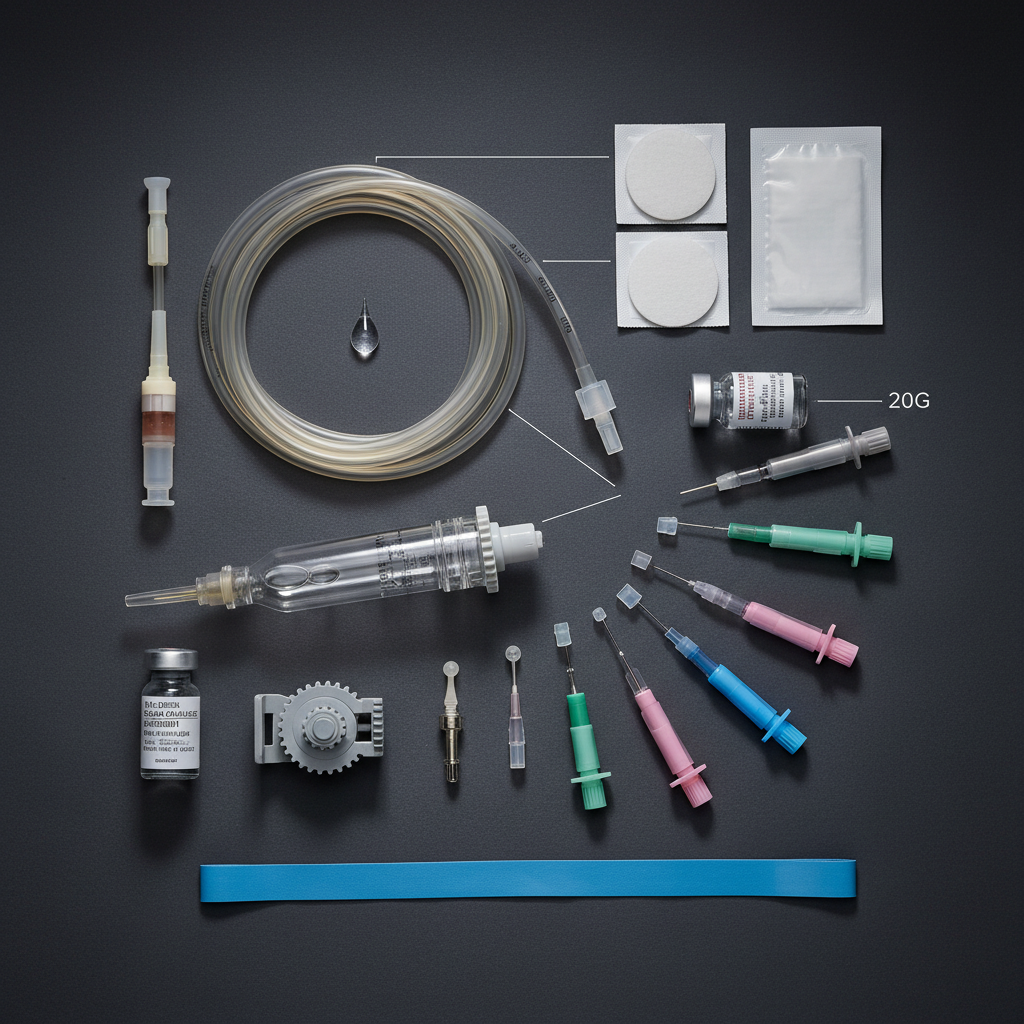
An infusion center supply checklist covers the bag-to-disposal chain: IV fluids, administration sets, access and prep supplies, PPE, and sharps—plus a separate gate for anything classified as prescription. Build par levels around protocol volume first; escalate to Rx credentialing only for legend drugs in licensed ship-to states.
This guide is for outpatient infusion, oncology-adjacent infusion suites, and multi-chair specialty clinics. It is operational procurement guidance—not medical, nursing, or legal advice. Your medical director, pharmacy partner, and state boards control formulary and administration scope.
Why infusion procurement fails (and how a checklist helps)
Infusion programs usually fail when one PO mixes three problems: (1) consumable continuity (sets, connectors, prep); (2) fluid bag-size mismatch vs protocol duration; and (3) account gating—staff treat every SKU as “supplies,” then stall on Rx-gated fluids or additives. A checklist with an Rx? (Y/N) column prevents the third failure and makes the first two measurable.
Scope: what this checklist includes (and excludes)
In scope: exam gloves/PPE; alcohol or CHX prep; gauze/tape; peripheral catheters and securement; primary/secondary sets; extension sets; needle-free connectors; sharps; emesis basins; underpads; basic monitoring disposables sold as devices.
Often Rx-gated (confirm per SKU): many IV solutions (including sodium chloride replacement preparations); legend flushes; injectable vitamins/antibiotics/biologics and other additives; any distributor-classified pharmaceutical SKU.
Out of scope: sterile compounding how-to; pump programming; clinical protocols; DEA-controlled substances. Source controlled medications only through authorized channels—never treat “infusion supplies” marketing as a controlled-substance pathway.
Core infusion center supply checklist
Use the table as a starting par worksheet. Adjust quantities to chair count, hours of operation, and protocol mix. Pack sizes vary by brand—record the case pack you actually receive.
- Category: Base fluids · Typical items: 0.9% NaCl 500 mL / 1,000 mL; other protocol fluids · Usually supplies account?: Often Rx-gated — confirm SKU · Notes: See Q8000 / Q8001 callouts below
- Category: Administration · Typical items: Primary sets, secondary/piggyback sets, extension sets · Usually supplies account?: Usually yes · Notes: Match drop factor / pump compatibility to your fleet
- Category: Access · Typical items: Peripheral catheters, tourniquets, securement, dressings · Usually supplies account?: Usually yes · Notes: Central-line accessories follow facility protocol
- Category: Prep & site care · Typical items: Alcohol / CHX swabs, gauze, tape, skin barriers · Usually supplies account?: Usually yes · Notes: Stock both routine and allergy-aware options if protocols require
- Category: Connectors · Typical items: Needle-free connectors, caps · Usually supplies account?: Usually yes · Notes: Standardization reduces nursing variance
- Category: Flush pathway · Typical items: Prefilled saline flushes · Usually supplies account?: Confirm gating · Notes: Do not assume “syringe = supplies”
- Category: PPE · Typical items: Nitrile exam gloves, gowns, masks as policy requires · Usually supplies account?: Usually yes · Notes: See gloves wholesale guide for ASTM education
- Category: Disposal · Typical items: Sharps containers, biohazard bags · Usually supplies account?: Usually yes · Notes: Size to peak chair load
- Category: Patient comfort · Typical items: Underpads, emesis basins, blankets (if stocked via medical channel) · Usually supplies account?: Usually yes · Notes: Operational, not clinical claim
Par-level worksheet columns
Item/SKU · pack size · on-hand · par · reorder point · Rx? (Y/N/Confirm) · storage per labeling · owner (materials vs pharmacy).
Fluids and tubing: treat as a system
Stock fluids and sets as a matched system:
- Bag size: Let protocol duration and waste policy drive 500 mL vs 1,000 mL mix—not vendor upsell.
- Set compatibility: Match primary/secondary sets to your pump library and connector standard.
- Secondary / piggyback capacity: Undercounting secondary sets is a common mid-shift failure in multi-drug chairs.
- Emergency kit hardware: Spill/hypersensitivity supplies (PPE, sharps, absorbent) stay on the materials list; clinical meds follow pharmacy rules.
Soft product plugs (confirm gating on the live product page)
- IV Therapy category: IV Therapy on USA MedPremium
- Example sodium chloride bags (may be Rx-gated; check the product page for your account’s eligibility): Q8000 0.9% Sodium Chloride 1,000 mL, Q8001 0.9% Sodium Chloride 500 mL
USA MedPremium is one Florida-headquartered B2B option (21068 Sheridan St, Fort Lauderdale, FL 33332). Score it with the same checklist you use for large national wholesalers and other specialty distributors—without ranking anyone “#1.”
PPE and infection-control consumables
Build glove par from chair-hours × expected changes, not leftover box counts. Factor gown/mask use where facility policy requires splash or hazardous-drug handling.
FDA regulates medical gloves as Class I reserved devices that generally require 510(k) clearance. CDC isolation-precaution guidance frames PPE as part of Standard Precautions—not a substitute for hand hygiene. Use those primary sources for SOPs; this article does not replace them.
Rx vs medical-supply gate (non-negotiable)
- Gate: Medical supplies (non-Rx) · Examples in an infusion center: Many gloves, sets, catheters, sharps, prep pads · Buyer expectation: Business wholesale account; identity / tax / ship-to as seller requires
- Gate: Pharmaceuticals (Rx) · Examples in an infusion center: Many IV fluids, injectables, additives · Buyer expectation: Credentialed healthcare establishment; distributor licensed for ship-to state
USA MedPremium publishes that medical supplies are available to businesses more broadly, while prescription wholesale is limited to credentialed buyers in its licensed states (see our current licensed states). Do not assume every fluid bag is available on a supplies-only login.
If a seller markets “anyone can buy Rx online” without credential checks, treat that as a diligence red flag.
Suggested onboarding sequence
- Map chair count, hours, and top protocols by volume.
- Split the list into Supplies vs Rx / Confirm.
- Pilot sets, PPE, and prep on a supplies account first.
- Credential for Rx only in needed ship-to states; ask how DSCSA TI/TS will be provided.
- Lock par levels after two to four weeks of burn data; re-verify permits at renewals.
CTA: https://usamedpremium.com/custom-tiers/apply?start=1
Apply for a wholesale accountFrequently Asked Questions
Related reading:
- The 2026 IV Therapy Sourcing Playbook
- IV Sets, Tubing & Catheters Guide
- Essential Guide to IV Fluids
- How Clinics Purchase Rx Wholesale
Sources
- FDA — Medical Gloves
- CDC — Isolation Precautions Guideline hub
- FDA — Drug Supply Chain Security Act (DSCSA) overview
- Florida Statutes §499.01 (Permits), 2025
- Florida DBPR Division of Drugs, Devices and Cosmetics — FAQs
- USA MedPremium — Pharmaceutical licensing
- BBB — USA MedPremium profile
- Disclaimer: USA MedPremium is a licensed medical supply and pharmaceutical distributor. This article is educational B2B guidance only—not legal, regulatory, medical, or pharmacy advice. Independently verify licensing, credentialing, product classification, and ship-to rules with qualified counsel, your state boards, and primary-source regulators. Product-level gating in the catalog controls what you can order—not this article. USA MedPremium does not sell ketamine or any DEA controlled substances.