IV Catheter Types — Winged, Butterfly & Straight for Mobile IV
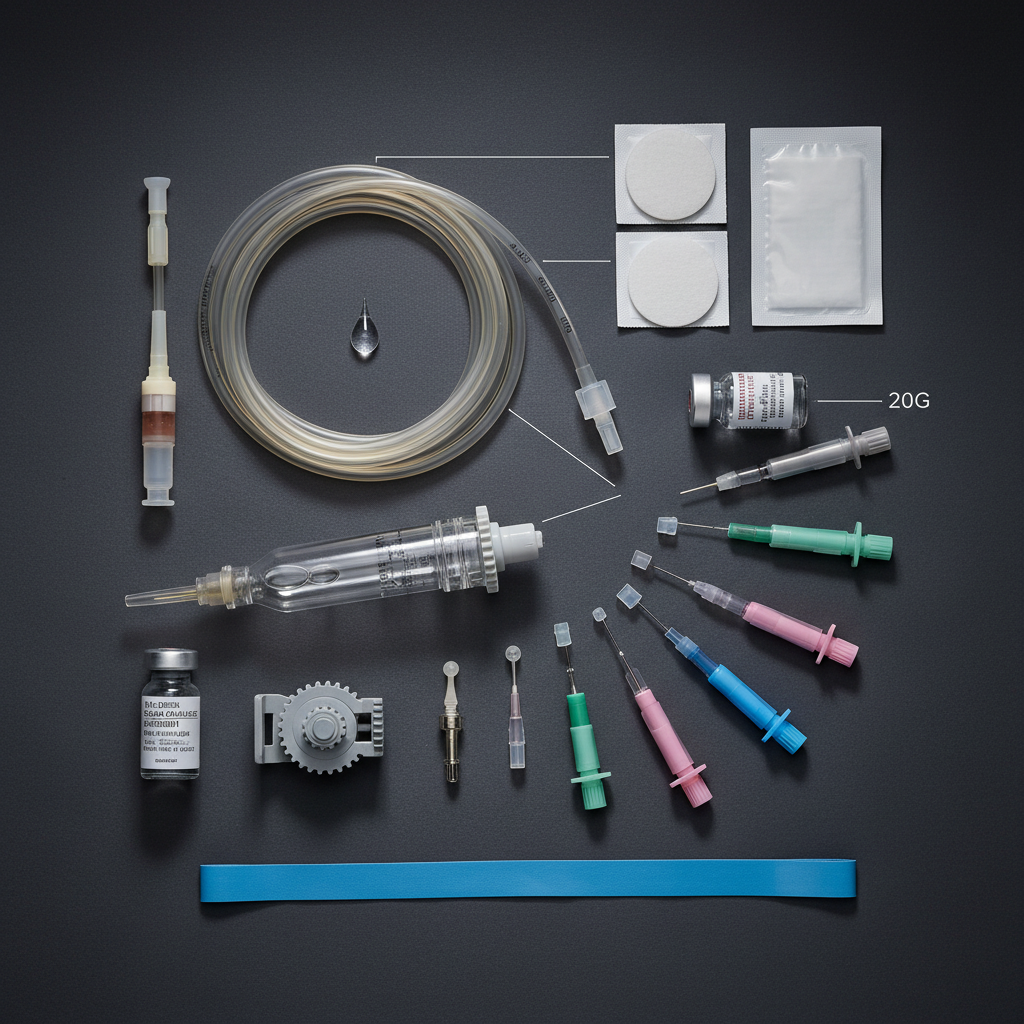
Mobile IV teams need a catheter taxonomy, not another comfort-only essay. This post maps winged (winged hub / ported) peripheral catheters, butterfly/winged-needle infusion sets, and straight/direct catheters—then translates the tradeoffs into mobile stocking rules that reduce blood exposure in homes and hotels.
How this differs from iv-catheters-patient-comfort: that guide is gauge/comfort process. This one is device-type taxonomy + bloodborne risk + sharps logistics for mobile routes.
Operational B2B only—not insertion training. USA MedPremium does not sell DEA controlled substances.
Taxonomy at a glance
- Type: Straight / direct peripheral IV catheter · What buyers usually mean: Over-the-needle catheter without large side wings (or minimal wings) · Common mobile role: Baseline access when policy/training favor it
- Type: Winged peripheral IV catheter · What buyers usually mean: Catheter with stabilizing wings / ported hub designs · Common mobile role: Often preferred for securement and control during start
- Type: Butterfly / winged infusion set · What buyers usually mean: Short-term winged needle set (scalp-vein style)—not always a dwell catheter · Common mobile role: Labs, short draws, or protocols that specify it—not a default long dwell
Confirm each SKU’s IFU: marketing slang (“butterfly”) is ambiguous. Preference cards should use exact catalog names.
Pros / cons (procurement + safety lens)
Straight / direct catheters
- Pros: Familiar to many hospital-trained clinicians; often broad gauge assortments; simple SKU story.
- Cons: Less “handle” during awkward home angles; securement depends heavily on dressing technique; no magic blood-exposure benefit by itself.
- Mobile note: Acceptable when competency and securement SOP are strong—pair with premium safety features if facility policy requires them.
Winged peripheral catheters
- Pros: Wings improve control during insertion and taping in non-ideal lighting/space; many premium lines add blood-control / needlestick-safety features.
- Cons: Slightly bulkier packaging; staff must be trained on that platform’s activation sequence.
- Mobile note: Strong default when medical directors want fewer blood-exposure events on sofas, beds, and bathroom-adjacent chairs.
Butterfly / winged infusion sets
- Pros: Useful for short, shallow access needs when clinically indicated.
- Cons: Easy to misuse as a “forever IV”; different disposal and dwell expectations; not a substitute for a proper peripheral catheter when the protocol needs one.
- Mobile note: Stock only if formulary/protocols name them—do not let butterflies silently replace catheter policy.
Mobile IV recommendation posture (premium / lower blood exposure)
Independent mobile operators should bias the preference card toward safety-engineered peripheral catheters (often winged or otherwise blood-control capable) that their clinicians are competency-signed on—not the cheapest open-needle option that “feels fine in a hospital bay.”
Score devices on:
- Blood-control / needlestick-prevention features aligned with your bloodborne pathogen program.
- Platform consistency across the fleet (one primary family).
- Packaging that survives tote compression.
- Gauge mix that matches booked protocols (see comfort sibling post for gauge education).
- Securement/dressing compatibility.
Premium here means risk-reducing engineering + training, not spa branding.
Sharps containers — mandatory mobile kit item
Every mobile kit that carries catheters or butterflies must include an appropriately sized sharps container with a transport plan.
- Requirement: Rigid, puncture-resistant sharps container · Why it matters on mobile: Home flooring and soft totes are not sharps trays
- Requirement: Sealable for vehicle transport · Why it matters on mobile: Prevents tip-outs between stops
- Requirement: Capacity sized to sticks + misfires for the route · Why it matters on mobile: Mid-route full containers drive unsafe improvisation
- Requirement: Facility disposal path on return · Why it matters on mobile: Do not abandon containers at client sites
- Requirement: Spare container or swap protocol · Why it matters on mobile: Overflow days happen
Stock sharps on the supplies ledger with catheters, gloves, and sets. Reorder sharps with the same discipline as catheters—empty sharps capacity cancels a route as surely as a missing gauge.
Browse adjacent IV hardware via the IV Therapy category and open a wholesale account at Apply. Fluids such as Braun EXCEL Q8001 / Q8000 or Baxter VIAFLEX 2B1323Q / 2B1324X remain a separate (often Rx-gated) lane—match bag volume to sets after catheter choice is locked.
Kit layout (access + sharps)
- Primary safety catheter family (winged or approved straight safety platform).
- Limited alternate gauge pouches.
- Butterfly sets only if protocol-listed.
- Securement/dressings matched to platform.
- Sharps container seated upright / braced in the tote.
- Spill/blood cleanup materials per facility policy.
What not to do
- Buy open-needle “cheap” butterflies as a universal mobile IV strategy.
- Transport used sharps in cups, bags, or glove boxes.
- Mix three catheter brands mid-week without competency sign-off.
- Confuse this taxonomy post with comfort-gauge coaching—link both.
Frequently Asked Questions
Related reading:
- IV Catheters & Patient Comfort
- Mobile IV Therapy Clinic Supply Checklist
- VIP Mobile IV Service Kit
- Mobile IV Catheter Set Bag Volume Match
Sources
- USA MedPremium — IV Therapy category
- USA MedPremium — Account apply
- OSHA — Bloodborne pathogens standard overview
- CDC — Sharps safety
- USA MedPremium — Q8001
- USA MedPremium — Q8000
- USA MedPremium — Baxter 2B1323Q
- USA MedPremium — Baxter 2B1324X
- FDA — Medical device databases (device labeling as applicable)
- Disclaimer: USA MedPremium is a licensed medical supply and pharmaceutical distributor. This article is educational B2B guidance only—not legal, regulatory, medical, or pharmacy advice. Independently verify licensing, credentialing, product classification, and ship-to rules with qualified counsel, your state boards, and primary-source regulators. Product-level gating in the catalog controls what you can order—not this article. USA MedPremium does not sell ketamine or any DEA controlled substances.