Laboratory Supply Procurement Strategy for 2026

Takeaways:
- Lab supplies sit at the intersection of four compounding constraints — reagent lot-to-lot variability, cold chain, closed-system equipment lock-in, and CLIA/CLSI regulation — that ordinary med-surg procurement workflows do not account for.
- Most labs run seven discrete supply categories, each with its own supply behavior and par-level math — disciplining sourcing by category, not by line item, captures the real inventory-cost and resilience wins.
- Reagents are the hardest category to source well: every new lot needs validation against the prior lot before clinical use, and switching manufacturers to chase a small unit-cost saving can cost more in revalidation time than it saves.
- Closed-system analyzers (Roche cobas, Abbott Alinity, Beckman, Siemens Atellica) run only proprietary consumables — the analyzer chosen years ago dictates the supplier relationship and the cost-per-test for its whole service life.
- The 2026 Enhancing CLIA Act would move oversight of laboratory-developed tests into the CLIA framework — potentially adding validation and documentation requirements that affect reagent and consumable choices for labs running LDTs.
- Multi-vendor sourcing works for open-system consumables and non-proprietary reagents (two to three qualified vendors); for proprietary closed-system reagents the strategy is direct manufacturer relationship plus 30–60 day safety stock.
Building a reliable supply chain for laboratory supplies is harder in 2026 than at any point since the pandemic-era disruptions of 2021. Reagent lots vary in performance from manufacturer to manufacturer. Closed-system analyzers lock labs into proprietary consumables that change cost-per-test dramatically.
Federal oversight of laboratory-developed tests is in active legislative motion: in 2026, Rep. Neal Dunn (R-FL) introduced the Enhancing Clinical Laboratory Innovation and Access Act (Enhancing CLIA Act), which the American Clinical Laboratory Association supports. And the post-pandemic supply chain has not fully rebalanced — procurement activity around clinical lab supplies has intensified in 2026, a signal that hospital labs, clinical diagnostics, biotech research, physician office labs, and reference labs are actively renegotiating their supply playbooks.
This guide walks lab managers, hospital lab directors, and biotech procurement leads through the seven core categories of laboratory supplies, the regulatory framework around CLIA and CLSI, the multi-vendor sourcing strategy that absorbs reagent disruption, and the par-level math that fits each lab type from a 200-test-per-day physician office lab to a reference lab running tens of thousands of specimens daily.
Skip the audit?
- If your lab would rather have a procurement specialist build a multi-vendor supply plan with you, request a free supply audit through your USA MedPremium representative and we’ll return a stocking and sourcing framework within five business days — built on the same workflow we use to maintain a 99.5% on-time shipment rate for 500+ healthcare facilities.
Why Lab Supply Procurement Is Uniquely Complex
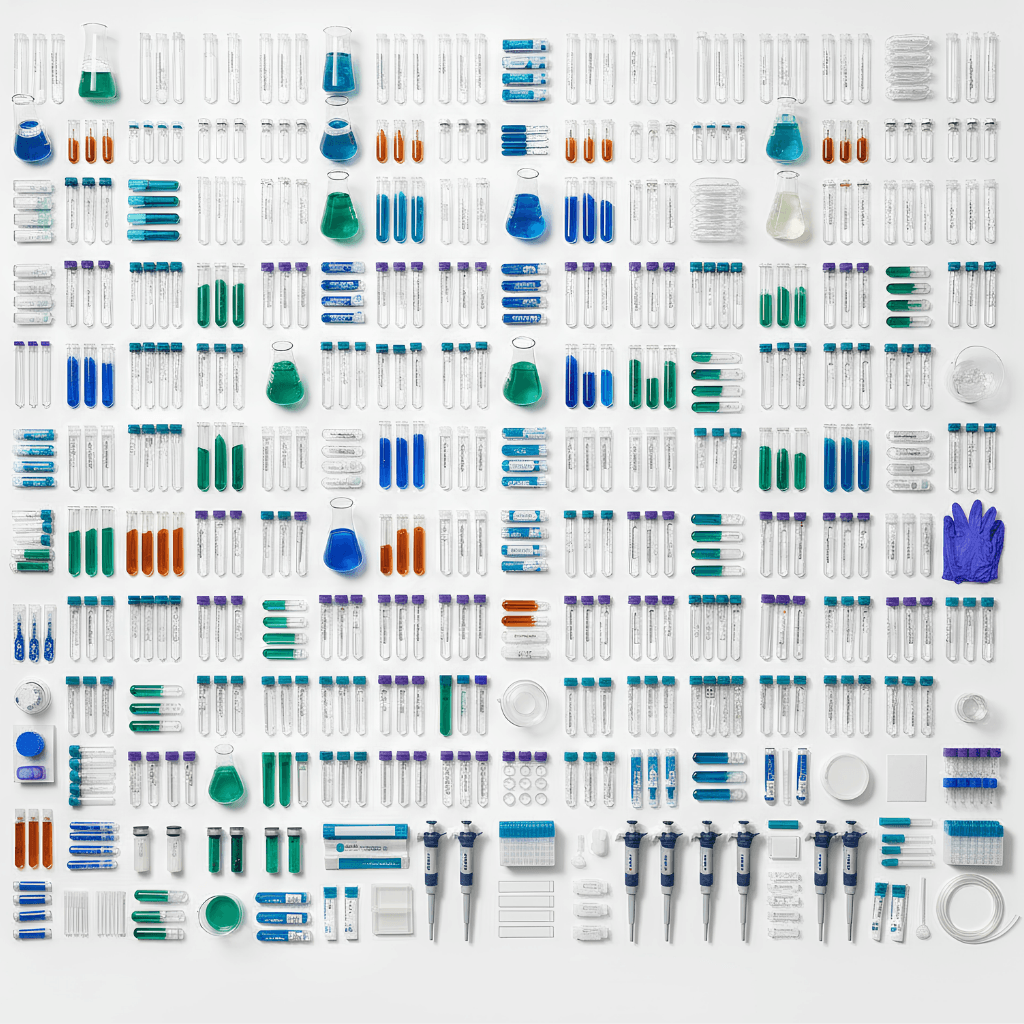
Most healthcare procurement categories are demanding. Laboratory supplies sit at the intersection of four constraints that compound each other.
Lot-to-lot variability. Reagents are biological or chemical products manufactured in lots, and small lot-to-lot variations in performance are routine. Clinical labs maintain validation protocols specifically because new lots of the same reagent may shift assay performance enough to require recalibration before patient samples are run. Procurement teams that switch manufacturers or even switch lots mid-month without notifying clinical lab staff create downstream chaos.
Cold chain on reagents. Many lab reagents — enzymes, antibodies, ELISA kits, molecular biology reagents — require refrigeration (2–8 °C) or freezing (−20 °C, or −80 °C for some PCR reagents and antibodies). Cold chain handling adds shipping cost, requires monitored storage capacity, and creates excursion risk that wastes inventory.
Closed-system equipment-consumable lock-in. Most major hematology, chemistry, and immunoassay analyzers run only the manufacturer’s proprietary reagents and consumables. Labs running Roche cobas analyzers cannot substitute Beckman Coulter or Abbott reagents. The procurement implication is that the choice of analyzer made years ago dictates the supplier relationship for as long as the analyzer is in service.
Regulatory framework. CLIA-regulated labs (most U.S. clinical labs) operate under the Clinical Laboratory Improvement Amendments framework, with CMS oversight. CLSI guidelines (from the Clinical and Laboratory Standards Institute) govern specimen collection, handling, and analytical workflows. The proposed 2026 Enhancing CLIA Act would expand oversight to laboratory-developed tests — potentially adding another layer of validation documentation to procurement workflows.
A procurement team that treats lab supplies like ordinary med-surg inventory ends up paying for it three ways at once: under-budgeted reagent validation, under-staffed cold chain handling, and single-vendor exposure that turns one lot disruption into a clinical operations problem.
The Seven Core Categories of Laboratory Supplies
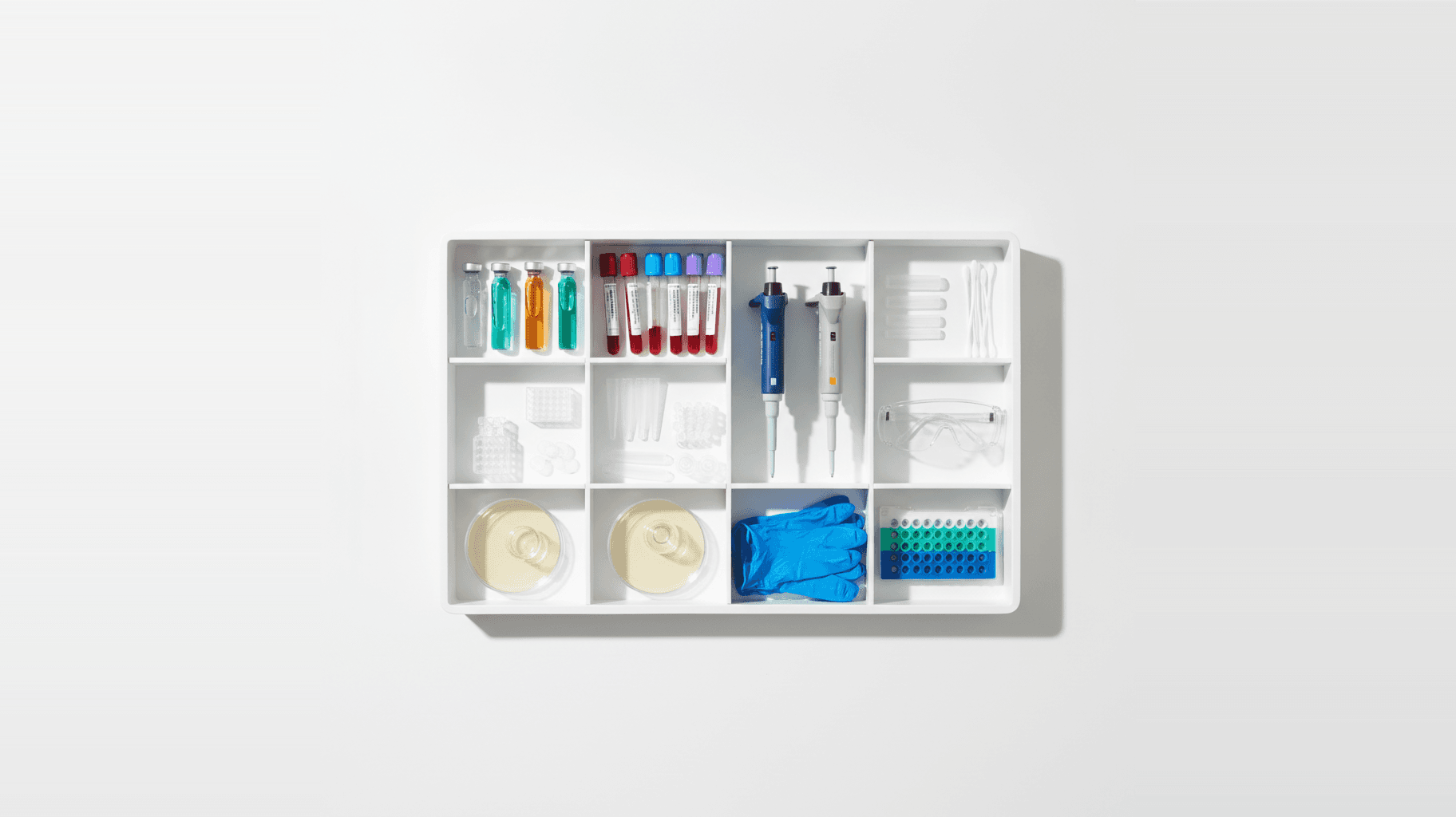
Most labs run seven discrete supply categories. Each has its own supply behavior, par-level math, and substitution rules, and procurement decisions made at the category level outperform decisions made at the line-item level.
- Reagents: Enzymes, antibodies, ELISA kits, PCR master mixes, control materials, calibrators. High complexity — lot-to-lot variability, cold chain, validation requirements.
- Specimen collection: Vacutainer tubes (BD, Greiner), urine cups, swabs, phlebotomy supplies, transport bags. Medium — high velocity, CLSI-governed.
- Consumables: Pipette tips, centrifuge tubes, microcentrifuge tubes, microplates, microscope slides, petri dishes. Medium — equipment compatibility critical.
- Lab equipment: Centrifuges, microscopes, pipettes, incubators, refrigerators, freezers. Low frequency — long capital cycle, service-contract overlay.
- PPE + safety supplies: Lab coats, safety glasses, nitrile gloves, biohazard waste. Medium — OSHA-governed, predictable demand.
- Microbiology + cell culture: Petri dishes, agar plates, culture media, cell culture flasks, antibiotics. Medium — cold chain dependencies, expiration management.
- Molecular biology + diagnostics: PCR plates, nucleic acid extraction kits, sequencing reagents, ELISA kits. High — fast obsolescence, cold chain, high cost per unit.
A lab that disciplines its par-level math and multi-vendor strategy by category — rather than treating “lab supplies” as one undifferentiated line — captures real inventory-cost and supply-resilience wins. Reference labs and large hospital systems have used this same category-discipline approach to absorb the 2024–2025 reagent shortages without disrupting patient testing turnaround.
Reagents: The Hardest Category to Source Well
Lab reagents are where the most procurement decisions go right or wrong. The major considerations:
Lot validation cost. Every new lot of clinical-assay reagent should be validated against previous lots before being released into routine testing. A typical CLIA-regulated clinical lab spends meaningful technical time per new lot on parallel testing — running both lots side-by-side against known control samples to verify performance equivalence. Switching manufacturers mid-stream multiplies that validation overhead.
Cold chain compliance. Validate every reagent shipment’s temperature data on receipt. Excursions outside the manufacturer’s labeled temperature window may invalidate the lot for clinical use. The procurement question to require on every reagent order is: “What was the temperature profile during transit, and is the data accessible before I accept the shipment?”
Multi-vendor strategy. For non-proprietary reagents (general buffers, common stains, common substrate solutions), maintain at least two qualified vendor relationships. For proprietary closed-system reagents (Roche cobas, Abbott Architect, Beckman Coulter DxI), the manufacturer is the vendor — focus on direct or distributor relationship reliability rather than substitution.
Major reagent manufacturer landscape:
- Thermo Fisher Scientific: Broad catalog — research and clinical, general consumables.
- MilliporeSigma (Sigma-Aldrich): Chemical reagents, antibodies, cell culture.
- Roche Diagnostics: Closed-system clinical chemistry, immunoassay, molecular diagnostics.
- Abbott Diagnostics: Architect immunoassay, Alinity systems, point-of-care.
- Beckman Coulter: Hematology, immunoassay, lab automation.
- Bio-Rad Laboratories: Quality control, electrophoresis, food microbiology, blood typing.
- BD (Becton Dickinson): Specimen collection (Vacutainer), microbiology, BD Veritor.
- Hologic: Cervical cancer screening (ThinPrep), molecular diagnostics, women’s health.
- QIAGEN: Nucleic acid extraction, PCR/qPCR reagents, molecular diagnostics.
- IDEXX: Veterinary diagnostics and water testing.
The 2025–2026 supply landscape continues to show intermittent reagent constraints on specific assays. The CDC’s laboratory supply-chain guidance acknowledges that situations may arise where in-date reagents are temporarily unavailable, and provides interpretive guidance on operating under those conditions. The structural workaround is multi-vendor sourcing on the categories where it is feasible and longer safety stocks on the categories where it is not.
Specimen Collection: The Workflow Foundation

Specimen collection supplies are the second-highest-velocity category in most clinical labs after reagents. CLSI guidelines (formerly NCCLS) govern most collection workflows — covering venous blood collection, capillary blood, and urinalysis specimen collection — and procurement teams should align their stocking to CLSI-approved devices and the lab’s documented collection protocols. Reference the current CLSI catalog for the up-to-date guideline numbers covering each procedure.
Blood collection tubes (Vacutainer-style):
The color-coded blood collection tube system is standardized across BD Vacutainer, Greiner Bio-One VACUETTE, and other manufacturers, but lot-to-lot anticoagulant content and additive performance can vary subtly. Most clinical labs standardize on one manufacturer’s tubes to maintain consistent additive performance.
- Red: None or clot activator. Serum chemistry, serology.
- Tiger/gold (SST): Clot activator + gel separator. Serum chemistry.
- Light blue: Sodium citrate. Coagulation studies.
- Lavender (purple): EDTA. Hematology, CBC.
- Green: Lithium or sodium heparin. Plasma chemistry.
- Gray: Sodium fluoride / potassium oxalate. Glucose, lactate.
- Royal blue: EDTA, sodium heparin, or no additive. Trace elements, toxicology.
- Yellow (ACD): Acid citrate dextrose. Cell culture, DNA typing, HLA.
- Yellow (SPS): Sodium polyanethol sulfonate. Blood culture.
Stock par levels for each color should match documented test volume. A common procurement error is over-stocking red-top tubes (which feel like “default” tubes) while under-stocking less common additive tubes (royal blue, yellow ACD) that have specific clinical indications.
Specimen transport and storage:
CLSI guidelines specify time-and-temperature requirements for specimen transport from collection to analysis. Procurement should stock:
- Insulated transport coolers with temperature-monitoring inserts for specimens requiring 2–8 °C transport
- Biohazard transport bags meeting IATA / DOT requirements for shipped specimens
- Specimen-stability-compatible secondary tube racks for the lab’s analyzer mix
- Urine specimen cups, midstream collection devices, and pediatric urine collection bags
Consumables: The High-Velocity Backbone
Consumables — pipette tips, centrifuge tubes, microcentrifuge tubes, microplates, microscope slides, petri dishes — turn over fast and represent a meaningful share of recurring lab spend.
Pipette tip compatibility. Pipette tips are a deceptive procurement category. Generic tips often look identical to manufacturer-branded tips but fit differently on the pipette body, affecting volume accuracy. A clinical lab using Eppendorf, Rainin, or Gilson pipettes should typically use the manufacturer’s tips or rigorously validate generic alternatives before broad adoption.
Centrifuge tube selection by application:
- 0.2 mL: Polypropylene. PCR microcentrifuge work.
- 0.5 / 1.5 / 2.0 mL: Polypropylene microcentrifuge tubes. Bench molecular biology, sample prep.
- 15 mL: Polypropylene conical. Cell culture, mid-volume centrifugation, sample prep.
- 50 mL: Polypropylene conical. Large-volume centrifugation, bulk reagent storage.
Microplates: 6-well, 12-well, 24-well, 48-well, 96-well, 384-well, and 1536-well plates each have specific uses (cell culture, ELISA, qPCR, high-throughput screening). Match the plate type to the assay and to the analyzer.
Microscope slides + petri dishes: Higher-velocity than most procurement teams expect when histology, microbiology, or cell culture workflows are active. Stock par levels by velocity, not by perceived importance — these consumables drive a lot of weekly reordering volume in active labs.
Equipment-Consumable Lock-In
The closed-system consumable problem deserves explicit procurement attention. When a lab purchases a clinical chemistry analyzer (Roche cobas, Beckman Coulter AU/DxC, Abbott Alinity, Siemens Atellica), the consumables that run on that analyzer are typically proprietary to the manufacturer. The cost-per-test math therefore comes from:
- Capital cost of the analyzer (often amortized over 5–7 years)
- Reagent + consumable cost per test (manufacturer-set, often locked through annual contracts)
- Service contract cost
- Throughput-volume-based pricing tiers
Procurement teams evaluating a new analyzer should model the total cost of ownership over the expected service life — including reagent costs, consumable costs, and the realistic test volume. The lowest capital cost is often not the lowest total cost if the manufacturer’s per-test consumable pricing is high.
For lab managers inheriting an installed analyzer base, the procurement work is direct manufacturer relationship management — contract renewals, volume discounts, multi-year service-bundled pricing, and timing reagent reorders to take advantage of full-pallet pricing where possible.
CLIA, CLSI, and the 2026 Enhancing CLIA Act
The regulatory framework around clinical labs is shifting in 2026. Key elements every procurement team should track:
CLIA (Clinical Laboratory Improvement Amendments). Federal regulations governing all U.S. clinical laboratory testing on human specimens. CMS administers the CLIA program through its Center for Clinical Standards and Quality, and CLIA-certified labs must follow specific quality-system requirements covering personnel, proficiency testing, quality control, and reagent management. The CDC’s laboratory supply-chain guidance acknowledges that CLIA-regulated labs may face situations where in-date reagents are unavailable and provides interpretive guidance on operating under those conditions.
CLSI guidelines. The Clinical and Laboratory Standards Institute publishes consensus-based standards covering specimen collection, processing, analytical workflows, and quality management. While CLSI guidelines are not federally mandated, they are widely adopted as the operational standard and are referenced in inspection criteria.
The Enhancing CLIA Act of 2026. Rep. Neal Dunn (R-FL) introduced the Enhancing Clinical Laboratory Innovation and Access Act (Enhancing CLIA Act) of 2026, which the American Clinical Laboratory Association supports. The bill responds to a 2025 federal court decision that vacated the FDA’s rule asserting authority over laboratory-developed tests, holding that LDTs are laboratory services rather than FDA-regulated medical devices. Rather than restoring FDA oversight, the bill would handle LDT oversight inside the CLIA framework — directing CMS to establish a database of LDT performance and validation information, enabling labs to submit LDTs for voluntary third-party review of analytical and clinical validity, and creating a centralized error-reporting system. The procurement implication: labs running LDTs may face new validation and documentation requirements that affect reagent and consumable choices. Track ACLA and CMS guidance for the current bill status.
The procurement question for any CLIA-regulated lab is: “When we change reagent manufacturer or change consumable lot, what is the validation workflow, and have we built the time-and-cost of that workflow into our sourcing decisions?” A lab that switches reagents to capture a 5 percent cost saving but spends 20 hours on revalidation has not actually saved money.
Multi-Vendor Sourcing Strategy by Lab Type
The multi-vendor strategy depends on the lab’s mix of open-system and closed-system instruments.
For open-system consumables (centrifuge tubes, pipette tips, slides, gloves, transport supplies):
- Maintain two or three qualified vendor relationships
- Reorder triggers at 14 days remaining on primary, 21 days on secondary
- Annual price-and-availability audit; switch primaries if the secondary outperforms
For non-proprietary open-system reagents (common buffers, stains, dyes, agar):
- Two qualified vendors, with documented lot-validation protocol for switches
- Maintain 30-day safety stock to absorb single-lot disruptions
For proprietary closed-system reagents (Roche, Abbott, Beckman, Siemens):
- Direct manufacturer relationship is the primary
- Distributor relationship may provide secondary access; verify manufacturer-authorized distribution
- 30–60 day safety stock depending on lab volume and shortage exposure
For specimen collection tubes (BD Vacutainer, Greiner VACUETTE):
- One primary manufacturer for color-code consistency across the lab
- Secondary manufacturer at 20–30 percent par for shortage backup
- Annual review of lot-quality data
Par Levels by Lab Type
Par levels for laboratory supplies vary widely by lab type. Frameworks below are starting points.
Physician office lab (POL) — moderate complexity testing
- 30-day par on top 20 SKUs (collection tubes, urine cups, glucose strips, common POC test cartridges)
- Single-vendor preferred for simplicity at this volume
- Annual procurement audit sufficient
Clinical / diagnostic lab — high complexity, multi-analyzer
- 30-day par on open-system consumables, 60-day par on closed-system reagents
- Two qualified vendors for every open-system category
- Quarterly procurement audit + monthly inventory cycle count
- Cold chain capacity matching peak reagent inventory + 30 percent buffer
Hospital outpatient + inpatient lab
- 60-day par across the board given downstream patient care criticality
- Multi-vendor sourcing on every category where feasible
- Disaster preparedness inventory layer (separate stockpile for incident response)
- Continuous cycle count + monthly variance reconciliation
Reference lab (high-throughput)
- Volume-tiered contracting drives much of the procurement work
- Direct manufacturer relationships across all major categories
- On-site bulk storage with dedicated logistics capacity
- Continuous reagent-lot validation workflow integrated with operations
Biotechnology research lab
- Consumables-heavy, lot-validation less critical than for clinical assays
- Cell culture and molecular biology reagents are the cold-chain-dependent backbone
- Just-in-time purchasing acceptable for routine consumables; safety stock for critical assay reagents
- Annual procurement audit; flexible vendor mix
How USA MedPremium Approaches Laboratory Supply Procurement
For clinical labs, hospital labs, biotech research labs, physician office labs, and reference labs, our 2026 procurement framework is built on the same operational baseline we apply across 500+ healthcare facilities — 99.5% on-time shipment, 24/7 procurement support, and a 26% reduction in average wait time vs. legacy distribution. Specific to lab supply:
- Documented chain-of-custody and cold-chain temperature data on every shipment, with full DSCSA compliance on any prescription-drug products included in an order
- Multi-vendor sourcing across the major lab supply manufacturer relationships (Thermo Fisher, BD, Sigma-Aldrich / MilliporeSigma, Bio-Rad, Beckman Coulter, QIAGEN, Hologic, Abbott, Roche, and others) for open-system categories
- Cold chain validated shipping for refrigerated and frozen reagents
- Procurement specialists experienced with CLIA and CLSI workflows
- Volume-tiered pricing structures matched to lab type and testing throughput
Request your free procurement audit.
- For a free procurement audit covering your lab supply needs, send us your last 90 days of ordering data and a description of your lab’s assay mix, and a specialist will return a multi-vendor sourcing plan within five business days.
Explore the catalog directly:
- Lab supplies & clinical laboratory supplies
- Specimen collection
- Laboratory glassware & plasticware
- Diagnostic tests and controls
- Test kits
- Chemicals & solutions
- Laboratory equipment
- Microbiology
- Medical Supplies & Equipment
Frequently Asked Questions
Related reading:
Sources & References
- CMS — Clinical Laboratory Improvement Amendments (CLIA) overview
- CDC — Clinical Laboratory Improvement Amendments (CLIA) program
- CLSI — Clinical and Laboratory Standards Institute (guidelines catalog)
- ACLA — Statement on introduction of the Enhancing CLIA Act of 2026
- 360Dx — Proposed Law Would Update CLIA With New Provisions for LDT Oversight
- ASCP — Laboratory supply shortages industry overview
- Disclosure: USA MedPremium is a licensed medical supply and pharmaceutical distributor. This article is for informational purposes only and does not constitute clinical, legal, or regulatory advice. Laboratory testing, reagent validation, and CLIA/CLSI compliance decisions should be made by qualified laboratory professionals. CLIA and CLSI requirements, reagent and supply availability, and the status of pending legislation such as the Enhancing CLIA Act change frequently — verify current details against the primary source before acting.