Growth Hormone Pen Sourcing: 2026 Practice Buyer’s Guide
Takeaways:
- Every growth hormone prescription requires four parallel workflows — a 2–8 °C cold chain, a brand-only product landscape, specialty pharmacy distribution, and prior authorization — that must all align before the first dose reaches the patient.
- The product landscape splits into five daily-injection brands (Norditropin, Genotropin, Omnitrope, Saizen, Zomacton) and three once-weekly long-acting products (Skytrofa, Sogroya, Ngenla) now moving into formulary contention.
- Novo Nordisk discontinued the Norditropin 30 mg/3 mL presentation in late 2025 — practices that stocked it for higher-dose adults must convert to two 15 mg pens, doubling cold chain volume and changing refill cadence.
- Prior authorization is the real procurement bottleneck — standardize the PA packet to the most-restrictive payer, track PA status in the prescribing record, and know each manufacturer assistance program’s enrollment workflow before you need it.
- Growth hormone is dispensed through narrow specialty pharmacy channels (Accredo, CVS Specialty, OptumRx Specialty, Walgreens Specialty) — the prescribing practice is rarely the dispensing entity.
- rhGH is DSCSA-regulated and additionally restricted under 21 U.S.C. § 333(e); verify your distributor’s state wholesale licenses and lot-level chain of custody before any order, and confirm REMS status on restricted products like Serostim.
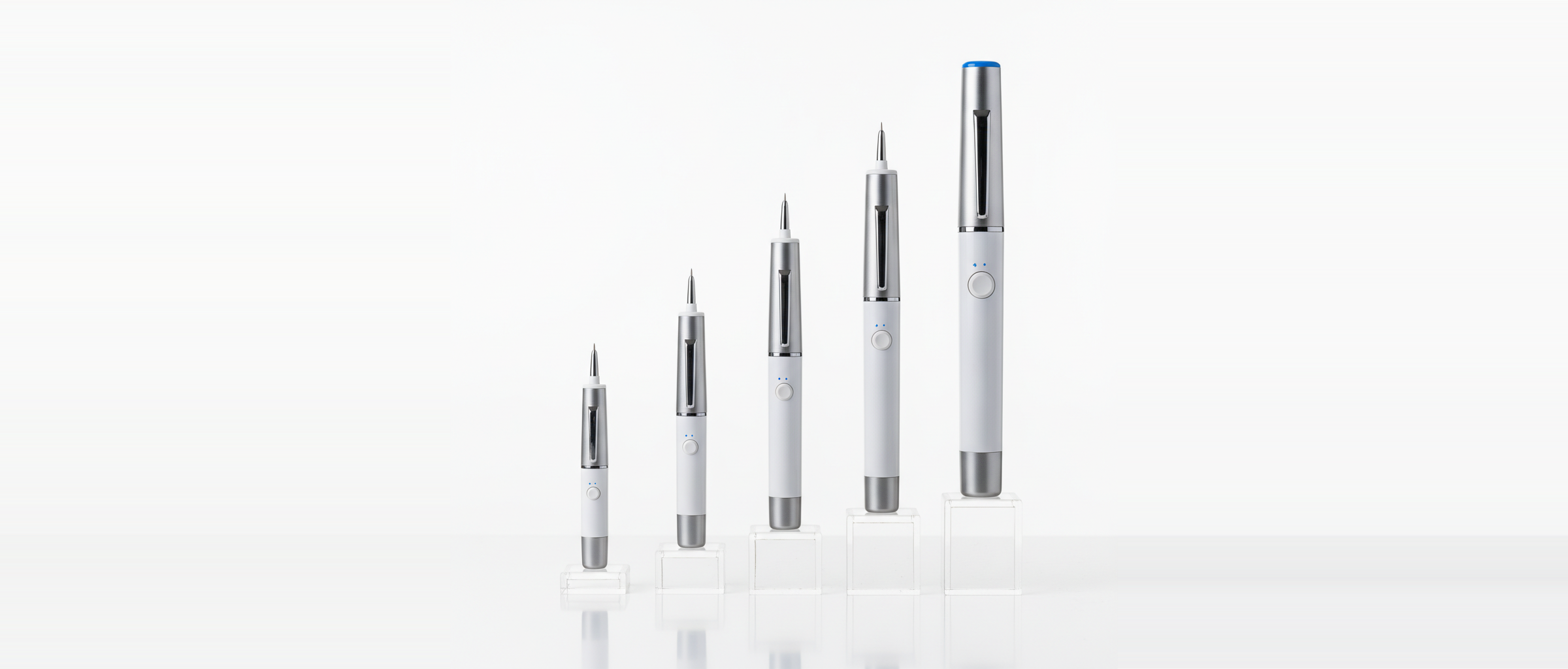
Sourcing a growth hormone pen has one of the most demanding procurement profiles in U.S. pharmacy. Every prescription requires a cold chain (2–8 °C from manufacturer to patient), a specialty pharmacy channel, and prior authorization that often takes weeks. The device choice locks the patient in for years: Norditropin FlexPro, Genotropin Pen, Omnitrope Pen, Saizen click.easy, Zomacton with ZomaJet, or one of the three newer once-weekly products — Skytrofa, Sogroya, or Ngenla.
Two changes in 2025–2026 have made this already-complex landscape harder. Novo Nordisk discontinued the Norditropin 30 mg/3 mL presentation in late 2025, removing a workhorse SKU. The three long-acting once-weekly products have moved from new-launch territory into formulary contention — several payers now name long-acting agents as preferred in 2026 plan updates.
Meanwhile, the prior-authorization bottleneck has intensified. A 2024 NPR investigation tied the worsening somatropin shortage directly to PA delays at the payer level.
This guide walks pediatric and adult endocrinology practices, specialty pharmacies, and hospital outpatient pharmacies through the current supply landscape: every approved brand and device, the long-acting transition, cold chain handling, par levels by facility type, and procurement workflows that keep patients on therapy.
Skip the audit?
- Have a procurement specialist build a multi-product growth hormone sourcing plan with you. Request a free supply audit through your USA MedPremium representative and we’ll return a stocking plan and specialty pharmacy coordination framework within five business days.
Why Growth Hormone Procurement Is Uniquely Complex
Most prescription pharmaceuticals move through routine pharmacy workflows. Recombinant human growth hormone (rhGH) requires four parallel workflows that must all align before the first dose reaches the patient.
Cold chain. Every somatropin product — daily-injection or once-weekly — must be stored and shipped at 2–8 °C. Excursions affect stability and efficacy. The procurement chain must verify temperature monitoring at every handoff between manufacturer, distributor, specialty pharmacy, and patient.
Brand-only landscape. Unlike most pharmaceutical categories, there are no traditional small-molecule generics for growth hormone. Omnitrope is FDA-approved as a biosimilar, but the rest of the rhGH market is brand-name. Multi-manufacturer sourcing means choosing between brand products, not switching to a generic.
Specialty pharmacy distribution. Growth hormone is typically dispensed through specialty pharmacy channels — Accredo, CVS Specialty, OptumRx Specialty, Cigna Specialty, and manufacturer-affiliated programs like NovoCare and Pfizer Patient Assistance. A practice that prescribes growth hormone is rarely the one that dispenses it.
Prior authorization gating. Almost every commercial and Medicare payer requires PA before covering growth hormone. Criteria vary by payer and indication: pediatric GHD, adult GHD, Turner syndrome, Prader-Willi, idiopathic short stature, SGA, CKD, SHOX deficiency, Noonan syndrome, HIV-associated wasting. PA denials and step-edit requirements drive much of the patient access delay procurement teams must plan around.
A pharmacy or practice that treats growth hormone like any other Rx will under-staff for PA work, under-budget for cold chain handling, and under-stock for the patient mix actually walking through the door.
The Growth Hormone Product Landscape in 2026
The U.S. somatropin landscape includes several FDA-approved brand products across daily-injection and once-weekly categories. Each has distinct indications, device characteristics, and procurement considerations. The products below are the most-prescribed; Serostim and other restricted-distribution products are covered in the regulatory section.
Daily-injection somatropin products
- Norditropin (Novo Nordisk): FlexPro prefilled, multi-dose pen, color-coded by strength. Pediatric GHD, adult GHD, Turner, SGA, ISS, Noonan, SHOX.
- Genotropin (Pfizer): Genotropin Pen 5, Pen 12, and MiniQuick single-dose device. Pediatric GHD, adult GHD, Turner, Prader-Willi, ISS, SGA, SHOX.
- Omnitrope (Sandoz): Pen 5, Pen 10, cartridges, and vials. Same indications as reference somatropin (FDA-approved biosimilar).
- Saizen (EMD Serono): click.easy reconstitution device and EasyPod auto-injector with usage tracking. Pediatric GHD, adult GHD.
- Zomacton (Ferring): Vials with the ZomaJet 2 Vision needle-free device or standard needle. Pediatric GHD, Turner, SHOX, ISS.
Once-weekly long-acting growth hormone products
- Skytrofa (lonapegsomatropin, Ascendis Pharma): Pediatric GHD (≥1 year), with subsequent pediatric label considerations.
- Sogroya (somapacitan, Novo Nordisk): Adult GHD; pediatric GHD (≥2.5 yrs, approved 2023); 2026 label expansion added SGA, Noonan syndrome, and idiopathic short stature.
- Ngenla (somatrogon, Pfizer / OPKO): Pediatric GHD.
The long-acting transition is the biggest structural change in growth hormone procurement in the last decade. Once-weekly products shift the injection burden from 6–7 per week to 1. This improves patient adherence and changes refill-volume calculations. Several payer formularies now name Sogroya and Skytrofa as preferred long-acting options, with Ngenla covered case-by-case. Verify against each plan's current formulary.
The 2025–2026 Somatropin Supply Picture
Two supply events are shaping growth hormone procurement this year.
The Norditropin 30 mg/3 mL discontinuation. Novo Nordisk discontinued this FlexPro presentation in late 2025. This was a high-volume SKU for adult GHD patients on higher doses. Its discontinuation has shifted demand to the 15 mg/1.5 mL and 10 mg/1.5 mL presentations. Practices that stocked the 30 mg pen for adult patients now need two 15 mg pens — doubling cold chain volume and changing refill cadence.
The broader somatropin supply picture. ASHP and FDA shortage reporting through 2024 and 2025 listed somatropin injection as an active shortage at various points. Availability shifted between Novo Nordisk, Pfizer, and Sandoz depending on lot-release timing. The underlying issue is not a single manufacturing failure but a demand–supply imbalance compounded by PA delays. Our injectable drug shortage guide covers the broader 2026 shortage context.
The 2024 NPR investigation made this point explicitly: PA delays shift demand in ways manufacturers cannot predict. When PA approvals cluster at quarter-end, demand spikes; when payers tighten step-edits, demand drops. The implication: no single manufacturer's supply outlook is reliable in isolation. Facilities serving growth hormone patients need working relationships with at least two — ideally three — major manufacturers.
Prior Authorization — The Real Procurement Bottleneck
Procurement teams sometimes treat prior authorization as a clinical workflow problem rather than a supply chain issue. For growth hormone, it is both.
PA criteria vary by payer but typically require:
- Diagnosis documentation (IGF-1 levels, stimulation testing results, bone age X-rays for pediatric)
- Height percentile and growth velocity data over time
- Failed alternative therapies where relevant
- Step-edit through a preferred product before access to non-preferred
- Specialty pharmacy enrollment confirmation
- Periodic re-authorization (typically annual, sometimes more frequent)
The procurement-side framework that works:
- Standardize the PA submission packet. Build one documentation template that satisfies the most-restrictive payer in your mix. Most other payers will accept it.
- Track PA status in the prescribing record, not just the pharmacy record. Procurement teams need visibility into pending PAs so refill timing matches approval timing.
- Coordinate with specialty pharmacy. Accredo, CVS Specialty, OptumRx Specialty, and the manufacturer programs (NovoCare, Pfizer PAP, Sandoz One Source, EMD Serono OneSource, Ferring HCP Resource) each have different turn-times and documentation requirements.
- Use manufacturer patient-assistance programs. Novo Nordisk’s NovoCare, Pfizer RxPathways and product-specific copay programs, Sandoz One Source, and similar programs from EMD Serono and Ferring can bridge patients during PA processing or coverage gaps. Know the enrollment workflow for each before you need it — exact program names vary by manufacturer and may update annually.
A useful quarterly audit metric: average PA-to-fulfillment time per payer and per product, with the bottleneck identified — diagnostic documentation, payer turn-time, specialty pharmacy enrollment, or step-edit hierarchy. That answer changes by payer and quarter. It informs which products and manufacturers to keep first-line.
Cold Chain Logistics and Storage
Every somatropin product is a temperature-controlled biologic.
- Manufacturer to wholesaler: 2–8 °C continuous. Validated shipper with temperature monitoring.
- Wholesaler to specialty pharmacy / practice: 2–8 °C continuous. Validated shipper, signature required, temperature data reviewed on receipt.
- Practice or specialty pharmacy storage: 2–8 °C in a monitored refrigerator. Continuous temperature logging, alarmed system, backup power.
- Patient transport home: 2–8 °C in an insulated cooler with ice packs. Patient education on transport is critical.
- Patient home storage: 2–8 °C in a refrigerator (some products tolerate brief excursions during use). Patient education on storage.
- In-use stability: Product-specific (typically 14–28 days at 2–8 °C; some allow brief room-temperature periods). Reference each product’s labeling.
Practices that dispense growth hormone in-office — less common, but real for some pediatric endo practices and specialty pharmacies — need a dedicated pharmaceutical-grade refrigerator with:
- Continuous temperature monitoring with alarming for excursions
- Battery or generator backup power
- Documentation of monthly verification per state pharmacy board requirements
- A standard operating procedure for temperature excursions (quarantine, manufacturer consultation, lot disposition)
The procurement question for any growth hormone shipment is: “What was the temperature profile during transit, and is the data accessible to verify before I accept the shipment?” A distributor that cannot answer that affirmatively is not equipped for biologic distribution.
Specialty Pharmacy Channels and Distribution
Growth hormone is one of the categories where the distribution chain is intentionally narrow. Major specialty pharmacy networks that dispense rhGH in the U.S. include:
- Accredo (Cigna / Express Scripts) — large network, broad payer coverage
- CVS Specialty — integrated with CVS Caremark PBM
- OptumRx Specialty — integrated with UnitedHealthcare Optum
- Walgreens Specialty Pharmacy — broad payer coverage
Manufacturer-aligned programs:
- NovoCare (Novo Nordisk — Norditropin, Sogroya)
- Pfizer Specialty Pharmacy / Pfizer Patient Assistance Program (Genotropin, Ngenla)
- Sandoz One Source (Omnitrope)
- EMD Serono OneSource (Saizen)
- Ferring HCP Resource (Zomacton)
- Ascendis Pharma patient support program (Skytrofa — verify current program name with the manufacturer)
For practices that prescribe but don’t dispense, the workflow is to send the prescription to the patient’s assigned specialty pharmacy (determined by their insurance) and coordinate enrollment, training, and refill timing.
For specialty pharmacies that dispense directly, the workflow is to maintain manufacturer relationships for each brand carried and stock multi-product inventory so payer-required substitutions happen without patient disruption.
For hospital outpatient pharmacies serving endocrinology referrals, the workflow is hybrid — discharge-bridging supply on-site, with steady-state refills through specialty pharmacy channels.
Par Levels by Practice Type
Growth hormone par levels are intensely specific to patient panel. The frameworks below are starting points.
Pediatric endocrinology specialty practice (in-office dispensing or sample stock)
- Representative samples for each major product on formulary (Norditropin, Genotropin, Omnitrope, Skytrofa, Sogroya, Ngenla) so providers can demonstrate device handling to families during training visits
- Daily-injection products at 14-day patient-bridge supply for new starts pending specialty pharmacy delivery
- Once-weekly products at 4-week patient-bridge supply (one box covers the bridge period)
- Refrigerator capacity audit: a busy pediatric endo practice can fill a dedicated refrigerator quickly
Adult endocrinology specialty practice
- Lighter on-site stock — most adult patients go directly to specialty pharmacy dispensing
- Maintain sample devices for patient training only
- Coordinate manufacturer-program enrollment with the specialty pharmacy on each new prescription
Specialty pharmacy
- Multi-product inventory across daily-injection and once-weekly somatropin products
- Cold chain capacity sized to peak monthly fill volume + 30% buffer
- Multi-manufacturer relationships (Novo Nordisk, Pfizer, Sandoz at minimum; EMD Serono, Ferring, Ascendis depending on payer mix)
- 14-day reorder trigger from each manufacturer
Hospital outpatient pharmacy
- Discharge-bridging supply for newly diagnosed pediatric and adult GHD patients
- One or two preferred products at 14-day patient-bridge par
- Documented specialty pharmacy referral pathway for steady-state refills
Concierge or boutique endocrinology practice
- Patient-specific stock pattern based on existing panel
- Cold chain handling appropriate to the smaller volume
- Streamlined manufacturer-program enrollment workflow for the limited patient list
DSCSA, REMS, and Regulatory Considerations
Growth hormone products are DSCSA-regulated. Lot-level chain of custody must be tracked through the entire distribution chain.
- Distributor must hold active state wholesale pharmaceutical distribution licenses in your state and every state where patients receive shipments — verify the public license listing before any rhGH order
- DSCSA transaction documentation (transaction information and transaction statement) required for every shipment, with interoperable electronic tracing per the enhanced requirements
- Cold chain temperature data must accompany each lot through every handoff
Some products and indications carry additional regulatory considerations:
- Serostim (somatropin for HIV-associated wasting) has historically been subject to anti-diversion / restricted-distribution controls — confirm current REMS or restricted-distribution requirements before sourcing.
- Federal law (21 U.S.C. § 333(e)) restricts the distribution and possession of human growth hormone for any use other than FDA-authorized indications pursuant to a physician’s order — and the FDA reads “distribution” to include writing the prescription, with the DEA authorized to investigate. Ensure prescriptions align with FDA-approved indications and that documentation of medical necessity is maintained.
The practical point: growth hormone is one of the categories where a non-DSCSA-compliant or non-state-licensed distributor is both legally problematic and clinically risky. Verify your distributor’s standing before placing any growth hormone order.
How USA MedPremium Approaches Growth Hormone Procurement
Growth hormone is one of the categories where USA MedPremium’s specialty-pharmaceutical procurement framework matters most. Our 2026 approach includes:
- Active DSCSA-compliant chain of custody on every shipment, with cold chain temperature data accessible per lot
- State wholesale pharmaceutical distribution licenses published for verification
- Multi-manufacturer sourcing across Novo Nordisk, Pfizer, Sandoz, EMD Serono, Ferring, and Ascendis Pharma where availability permits
- Validated cold-chain shippers for every growth hormone order
- Procurement specialists available 24/7 to coordinate with specialty pharmacy partners, manufacturer assistance programs, and prior-authorization workflows
- Bridge-supply coordination for newly diagnosed patients pending specialty pharmacy delivery
Request your free procurement audit.
- Send us your last 90 days of growth hormone prescribing history plus a brief description of your patient panel, and a specialist will return a multi-manufacturer sourcing plan within five business days.
Explore the catalog directly:
Frequently Asked Questions
Related reading:
- Hormone Replacement Therapy Supply Guide: Patches, Injectables, and What Facilities Need to Know About HRT Procurement
- Cardiovascular Medications Sourcing Guide: A 2026 Facility Buyer’s Playbook
Sources & References
- FDA — Drug Shortages (somatropin listings)
- ASHP — Current Drug Shortages (somatropin injection detail)
- NPR — Prior authorizations make growth hormone shortage worse (Apr 2024)
- Pediatric Endocrine Society — Sogroya (somapacitan) clinical overview
- Federal law — 21 U.S.C. § 333(e), restrictions on distribution and possession of human growth hormone
- Disclosure: USA MedPremium is a licensed pharmaceutical distributor. This article is for informational purposes only and does not constitute medical advice. Clinical decisions regarding growth hormone therapy, product selection, substitution, and dosing should be made by qualified healthcare providers. Drug shortage status, discontinuations, label expansions, formulary preferences, REMS requirements, and DSCSA deadlines change frequently — verify current details against the primary source before acting.