The Injectable Drug Shortage Crisis in 2026

Takeaways:
- 270 active drug shortages across the U.S., with sterile injectables consistently the most vulnerable category.
- 84% of pharmacy teams report moderate or critical impact from sterile fluid shortages alone.
- 80% of active pharmaceutical ingredients are sourced overseas, making global supply chain disruption a direct threat to your facility.
- Facilities with dual-supplier relationships and pre-approved substitution protocols maintained 94% of scheduled treatments during the 2024 IV fluid crisis.
- DSCSA compliance is now federally enforced with fines up to $500,000 per violation — every supplier must provide serialized traceability.
270 Active Drug Shortages. 84% of Facilities Impacted. Your Injectable Supply Is Not Safe.
The FDA Drug Shortages database tracks approximately 270 active drug shortages across the United States right now. The crisis hits hardest in sterile injectables used for intravenous drug administration: chemotherapy agents, sedation drugs, controlled substance analgesics, IV fluids, and electrolyte replacements.
A Problem That Is Not Going Away
Seventy-five percent of all active shortages began in 2022 or later. These are not temporary disruptions. They are chronic conditions of the medication supply chain itself.
ASHP surveys confirm that 84% of pharmacy teams reported moderate or critical impact from sterile fluid shortages alone. Facilities across Florida and the Southeast experienced this firsthand after Hurricane Helene devastated Baxter’s North Carolina manufacturing plant, which produced a significant share of the nation’s large-volume IV fluids.
The Real-World Fallout
The downstream effects were immediate and severe:
- Infusion centers delayed treatments
- Surgery centers rescheduled procedures
- Specialty pharmacies rationed saline
- Outpatient clinics scrambled for alternative suppliers
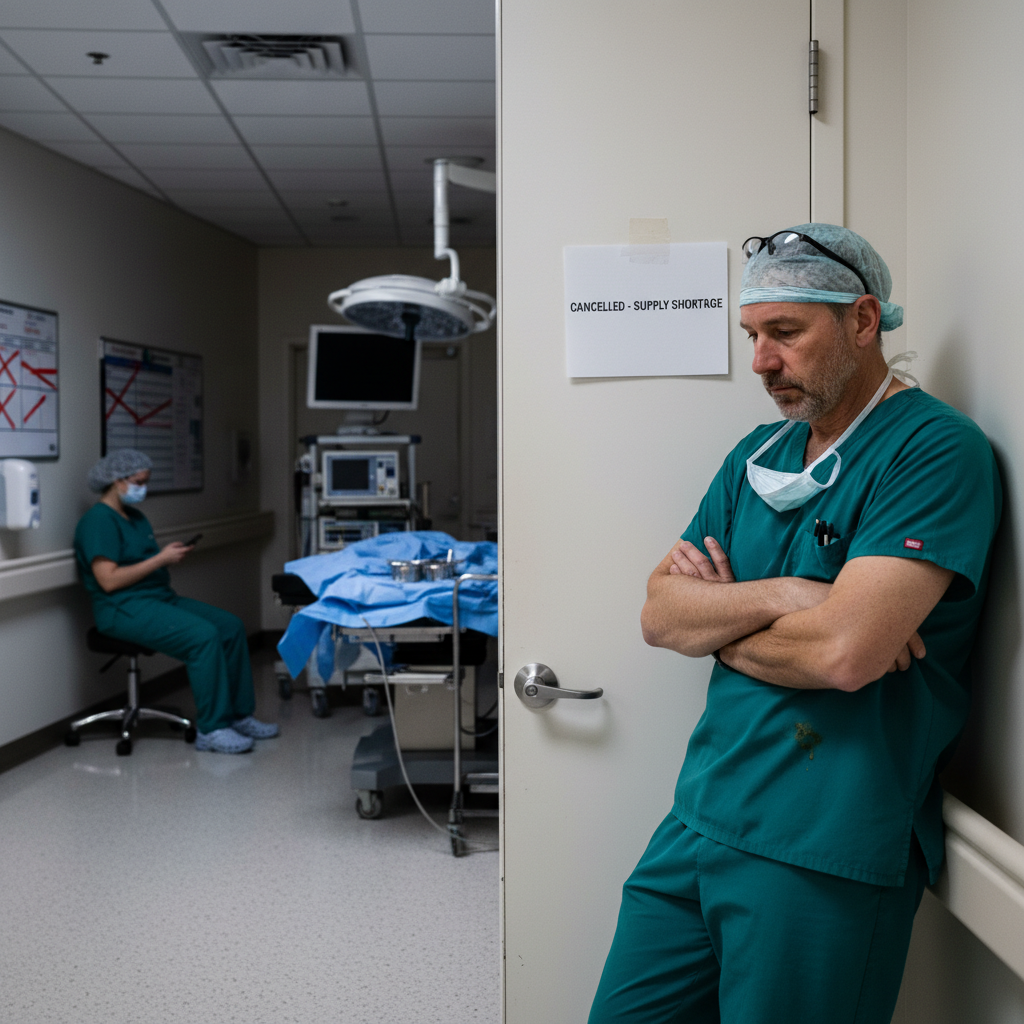
ASHP reported 89 new shortages in 2025 — the lowest since 2006 — but 15% of active shortages involve controlled substances. Long-standing gaps in critical drug access continue to strain patient care across infusion centers, surgery centers, and outpatient clinics nationwide.
The Global Supply Chain Factor
The vulnerability extends beyond domestic manufacturing. An estimated 80% of active pharmaceutical ingredients used in U.S. drug manufacturing are sourced from overseas, primarily India and China. Geopolitical tensions, export restrictions, and quality control failures at overseas active pharmaceutical ingredients facilities have contributed to multiple shortage events in the past three years. Any drug shortage management plan that ignores global active pharmaceutical ingredients supply chain risk is incomplete.
This guide delivers actionable strategies for optimizing your injectable supply, whether you run a medical practice, an infusion center, a pharmacy, or a specialty clinic. At USA MedPremium, based in Florida and serving healthcare facilities across the country, we built our pharmaceutical supply management model to help your care team optimize drug availability before a shortage becomes a patient safety event.
Browse Our Injectable & IV Therapy CatalogWhy Sterile Injectables Are the Most Vulnerable Drug Category
Sterile injectables require clean rooms, complex sterilization, and strict quality control at every stage of manufacturing. That makes them expensive to produce and low-margin for generic manufacturers — which is why they are the first products to disappear when a production line shuts down or a raw material supply tightens.
Manufacturing Complexity Drives Fragility
The GAO confirmed that as of July 2024, the FDA was tracking 102 shortages, with sterile injectables and oncology drugs consistently overrepresented. A single disruption can cascade across the healthcare system for months. Consider the 2023 tornado that damaged a Pfizer plant and halted production of 15 medications.
Key factors that make sterile injectables uniquely vulnerable:
- High manufacturing standards — clean room requirements and sterilization protocols limit how many facilities can produce them
- Low profit margins — generic manufacturers exit the market when margins shrink, reducing supply redundancy
- Few therapeutic substitutes — unlike oral medications, many injectables have no clinically equivalent alternative
- Short shelf lives — shorter expiration windows mean facilities cannot stockpile significant reserves
- Concentrated production — a small number of plants produce the majority of U.S. supply for many injectable categories
The Patient Safety Connection
For facilities that depend on IV therapy supplies for daily patient care — including sedation, hydration, pain management, and nutritional support — the risk is not abstract. Every shortage forces your pharmacist and clinician team to evaluate alternatives, adjust medication regimens, and document substitutions, all while maintaining patient safety and avoiding medication administration errors.
67% of hospital pharmacists reported witnessing medication errors directly linked to shortage-driven substitutions.
- That statistic underscores why medication optimization starts with understanding which products are most likely to disappear and building your procurement strategy around that reality. Facilities that lack a drug shortage management plan are not just operationally exposed — they are clinically exposed.
Optimize Your Pharmacy Inventory for Injectable Resilience
The foundation of medication supply chain stability starts with how you manage what is already on your shelves. Pharmacy inventory management for injectables requires a different approach than oral medications because sterile injectables have shorter shelf lives, stricter storage requirements, and fewer therapeutic substitutes.
Implement First-In, First-Out Rotation
Start with the fundamentals. Every injectable product in your facility should follow a strict first-in, first-out (FIFO) rotation protocol.
- Set expiration alerts at 90 days — medication use tracking should flag products approaching expiration, giving your pharmacy team time to reallocate stock or adjust dose scheduling.
- Conduct weekly shelf audits — verify that newer stock is positioned behind older inventory, especially for high-turnover items like saline, dextrose, and electrolyte replacements.
- Create a reallocation protocol — products approaching expiration at one location can be transferred to a higher-volume site before they expire.
Establish Data-Driven Par Levels
Set par levels based on actual patient volume data rather than historical ordering patterns. Your medication management system should connect consumption rates to reorder triggers so you avoid both overstocking and emergency shortfalls.
- Review par levels monthly, not quarterly
- Adjust for seasonal volume changes (e.g., flu season increases IV fluid demand)
- Factor in lead time variability — if a supplier’s average delivery time increases from 2 days to 5, your par level must account for that gap
Track Administration Supplies Alongside Drugs
A full vial is useless without the right administration supplies to deliver it. Track every syringe, needle, and administration set alongside the drugs themselves.
Automated inventory systems with real-time consumption data can reduce waste by 15-20% compared to manual tracking.
- This waste reduction compounds over time. For a mid-size infusion center processing 200 patients per week, that translates to thousands of dollars in annual savings — and fewer emergency orders that disrupt clinical workflows.
Ready to strengthen your injectable supply chain now?
- USA MedPremium maintains real-time stock visibility across sterile injectables, IV fluids, and administration supplies — with priority fulfillment for approved accounts.
Navigate Drug Allocation Programs and Ethical Distribution
When manufacturers cannot meet full demand, they place products on drug allocation programs that limit how much each facility can order based on historical purchasing volume. This is where comprehensive medication management planning becomes critical.
How Allocation Programs Work
If your facility did not purchase a product regularly before the shortage, your allocation may be zero — even if your patient outcomes depend on it. The allocation formula typically considers:
- Historical purchasing volume — your average order quantity over the past 6-12 months
- Facility type and size — hospitals may receive priority over outpatient clinics for certain products
- Manufacturer capacity — allocations adjust downward as production capacity decreases
- Distributor relationships — facilities with active accounts at multiple distributors may access allocation through more than one channel
Build Your Allocation Committee Before the Shortage
ASHP guidelines recommend establishing a resource allocation committee that includes representatives from pharmacy, nursing, and medicine before a shortage hits. This committee should have pre-approved therapeutic interchange protocols that allow your pharmacist to substitute clinically equivalent alternatives without delaying drug administration.
For high-risk medication categories — chemotherapy, sedation, and controlled substance analgesics — these protocols must be reviewed and approved in advance by the medical staff. Waiting until the shortage arrives to debate substitution criteria is how facilities end up cancelling procedures and compromising patient safety.
Consider Compounding Pharmacy Alternatives
When commercial products are unavailable, compounding pharmacy alternatives can fill critical gaps. FDA-registered 503B outsourcing facilities can produce sterile compounded preparations under current good manufacturing practice (cGMP) conditions.
Key considerations for compounding alternatives:
- Verify the outsourcing facility’s FDA registration and inspection history
- Confirm the compounded product meets USP standards for sterility and potency
- Establish agreements with compounding partners before shortages occur — capacity fills quickly once a shortage is announced
- Document all compounded product usage for regulatory compliance
Build Resilient Specialty Drug Procurement Relationships
Specialty drug procurement resilience means never depending on a single source for any critical injectable. The facilities that weather shortages best maintain active purchasing relationships with at least two qualified suppliers for every high-risk category — from chemotherapy agents to IV therapy supplies like saline and electrolyte replacements.
Diversify Your Supplier Base
This is not about hoarding. It is about pharmaceutical supply management that ensures your historical purchasing volume with multiple vendors qualifies you for allocation when supply tightens.
Steps to build supplier diversification:
- Identify your top 20 highest-risk injectables — products with a history of shortages, single-source manufacturing, or long lead times
- Establish active accounts with at least two distributors for each high-risk product
- Place regular orders through each account — even small quantities maintain your purchasing history and allocation eligibility
- Review supplier performance quarterly — track fill rates, lead times, and communication responsiveness during shortage events
Verify DSCSA Compliance for Every Supplier
Under the FDA DSCSA compliance framework, every supplier must provide serialized traceability documentation for prescription products. This is not optional. It is a federal requirement with fines up to $500,000 per violation.
Your supplier compliance checklist should include:
- Serialized transaction data — product name, lot number, and chain-of-ownership history for every shipment
- Verification capabilities — ability to verify product identifiers at the package level upon request
- Suspect product protocols — documented process for identifying and quarantining suspect or illegitimate products
- LegitScript certification — an independent third-party verification of pharmacy and distributor legitimacy
At USA MedPremium, we are LegitScript certified, FDA certified, and fully DSCSA compliant. We source across multiple manufacturers so that our partner facilities maintain critical drug access even when primary suppliers go on allocation. That diversified sourcing model is the difference between a manageable medication management challenge and a patient care crisis.

Technology and Automation for Inventory Visibility
Manual inventory tracking cannot keep pace with the speed and complexity of modern drug shortages. Facilities that invest in technology-driven inventory visibility respond faster, waste less, and maintain better continuity of care.
Automated Inventory Management Systems
Modern pharmacy inventory platforms provide capabilities that manual processes cannot match:
- Real-time stock level monitoring — alerts trigger when inventory drops below par levels, before a stockout occurs
- Consumption trend analysis — algorithms identify usage patterns and predict reorder timing based on actual consumption, not estimates
- Expiration tracking dashboards — visual displays of approaching expirations across all locations, enabling proactive reallocation
- Integration with ordering platforms — automated reorder triggers reduce the lag between identifying a need and placing an order
Shortage Intelligence Tools
Several organizations provide early-warning shortage data that facilities can integrate into their planning:
- FDA Drug Shortage Database — official shortage listings with expected resolution timelines
- ASHP Drug Shortage Resource Center — clinical guidance and therapeutic alternatives for active shortages
- Vizient and Premier alerts — GPO-level shortage notifications with allocation details
Facilities that monitor these sources proactively — rather than reacting when a product is unavailable at the point of ordering — gain days or weeks of lead time to secure alternatives.
Barcode Scanning and Serialization
Package-level barcode scanning supports both inventory accuracy and DSCSA compliance. Scanning at receipt, storage, and administration creates a digital chain of custody that satisfies regulatory requirements while improving inventory precision.
Connect Medication Optimization to Patient Outcomes
Medication optimization is not just a supply chain concept. It is a clinical practice discipline that directly affects patient outcomes, morbidity and mortality, and quality of care.
Clinical Impact of Shortage-Driven Substitutions
When a clinician must substitute a medication due to a shortage, the drug effect profile of the alternative may differ in onset time, duration, or side effect risk. Effective medication management during shortages means your healthcare team has clear protocols for:
- When to substitute — clinically equivalent alternatives exist and the substitution is safe for the patient’s condition
- When to delay — the preferred product is expected to return within a timeframe that does not compromise care
- When to escalate — no acceptable alternative exists and the patient requires transfer to a facility with supply
Documentation and Communication Protocols
For facilities managing chronic conditions through injectable therapies — including disease management protocols for autoimmune conditions, pain management, and nutritional support — every substitution must be:
- Documented in the medical record with the clinical rationale for the change
- Communicated to the full care team including nursing, pharmacy, and the prescribing provider
- Tracked for medication adherence to identify patients who may experience adverse outcomes from the switch
- Reviewed upon product return to determine whether the patient should revert to the original regimen or continue the alternative
The Preparedness Advantage
The facilities that maintain patient outcomes during shortage periods are the ones that built their substitution protocols, inventory systems, and supplier relationships before the crisis arrived. Reactive facilities absorb the full impact. Prepared facilities manage through it.
Regulatory Outlook for 2026-2027
The regulatory landscape for drug shortages is shifting. Facilities should monitor several developments that will affect procurement and compliance obligations over the next 18 months.
DSCSA Full Enforcement
The FDA’s Drug Supply Chain Security Act reached its final implementation milestone in November 2024, requiring package-level electronic traceability across the entire supply chain. Enforcement actions are expected to increase through 2026-2027 as the FDA transitions from its stabilization period to active compliance verification.
Proposed Shortage Reporting Requirements
Congressional proposals introduced in 2025 would require manufacturers to provide earlier and more detailed notification of anticipated shortages. If enacted, facilities could gain weeks of additional lead time to prepare for supply disruptions.
FDA Manufacturing Quality Initiatives
The FDA has expanded its focus on manufacturing quality as a root cause of shortages. The agency’s quality management maturity program incentivizes manufacturers to adopt advanced quality systems — facilities should expect improved long-term supply reliability for manufacturers that participate, but potential short-term disruptions as plants invest in upgrades.
Case Study: How One Multi-Site Infusion Network Weathered the IV Fluid Crisis
Details anonymized for confidentiality. Based on a composite of real facility experiences during the 2024 IV fluid shortage.
The Challenge
A five-location infusion network in the Southeast administered 1,200 IV treatments per week across oncology, hydration therapy, and autoimmune disease management. When Hurricane Helene disrupted Baxter’s North Carolina manufacturing plant in late 2024, the network’s primary IV fluid supply dropped by 60% overnight.
What They Did Right
The network had implemented several preparedness measures before the crisis:
- Dual-supplier relationships — active purchasing accounts with two distributors meant they qualified for allocation from both sources, recovering 40% of lost volume within the first week
- Pre-approved therapeutic interchange protocols — their pharmacy and therapeutics committee had already approved alternative fluid formulations, eliminating the 5-7 day delay most facilities experienced while debating substitutions
- Automated inventory tracking — real-time consumption data allowed them to identify which locations had surplus stock and redistribute across the network within 48 hours
- Compounding pharmacy partnership — a pre-existing agreement with a 503B outsourcing facility provided supplemental electrolyte solutions within 10 days
The Result
The network maintained 94% of its scheduled treatments during the first month of the shortage, compared to an industry average of approximately 70%. No patients required transfer to another provider. The additional procurement cost during the shortage period was approximately $18,000 — a fraction of the revenue that would have been lost from cancelled treatments.
4.9/5“The investment in preparedness — dual suppliers, pre-approved protocols, automated inventory — paid for itself in the first two weeks of the shortage.”
How USA MedPremium Helps You Optimize Drug Availability
Every section above points to the same conclusion: injectable drug shortages punish reactive facilities and reward prepared ones. The difference is not luck. It is pharmaceutical supply management infrastructure built before the next shortage announcement arrives.
What Sets Us Apart
At USA MedPremium, we serve medical practices, infusion centers, surgery centers, aesthetic clinics, home care agencies, and specialty pharmacies with a supply chain built for resilience:
- DSCSA compliant with full electronic traceability — auditable chain of custody for every shipment
- LegitScript and FDA certified — independently verified compliance
- Multi-manufacturer sourcing — diversified supply across sterile injectables, reducing single-source exposure
- 99.9% on-time fulfillment for time-sensitive medications — sustained performance, not an aspiration
- 99.5% on-time shipment rate across all orders — published publicly, not buried behind a login
- Ethical Allocation Program — real-time data-driven allocation during shortages, distributed with fairness and transparency
- Named account representatives — 24/7 dedicated support with an average 5-minute response time
- 15-35% bulk discounts across tiered volume thresholds (100+, 250+, 500+ units), with net payment terms for qualified buyers
Your Next Step
Optimize your facility’s injectable supply before the next shortage hits. That is not a suggestion. It is the standard for 2026.
Request a supply consultation today. Our team will review your current injectable inventory, identify single-source vulnerabilities, and build a procurement plan that qualifies your facility for allocation across multiple suppliers — before supply tightens.