Pen Needles, Syringes & Sharps Supplies: 2026 Procurement Guide
Takeaways:
- Branded GLP-1 prescribing has reset pen-needle demand to a sustained-high baseline, the compounded GLP-1 channel is closing under FDA enforcement, and 2026 OSHA penalties have climbed — three forces that should reshape your injection-supply par levels.
- Every practice using needles is regulated under OSHA’s Bloodborne Pathogens Standard (29 CFR 1910.1030): maintain a written Exposure Control Plan, a sharps injury log, documented employee input on safety devices, and an annual device evaluation.
- The ADA Standards of Care (2026) and FITTER consensus recommend 4 mm 32G pen needles at 90° for most adults regardless of BMI; verify ISO 11608-2 Type A compatibility before substituting across pens.
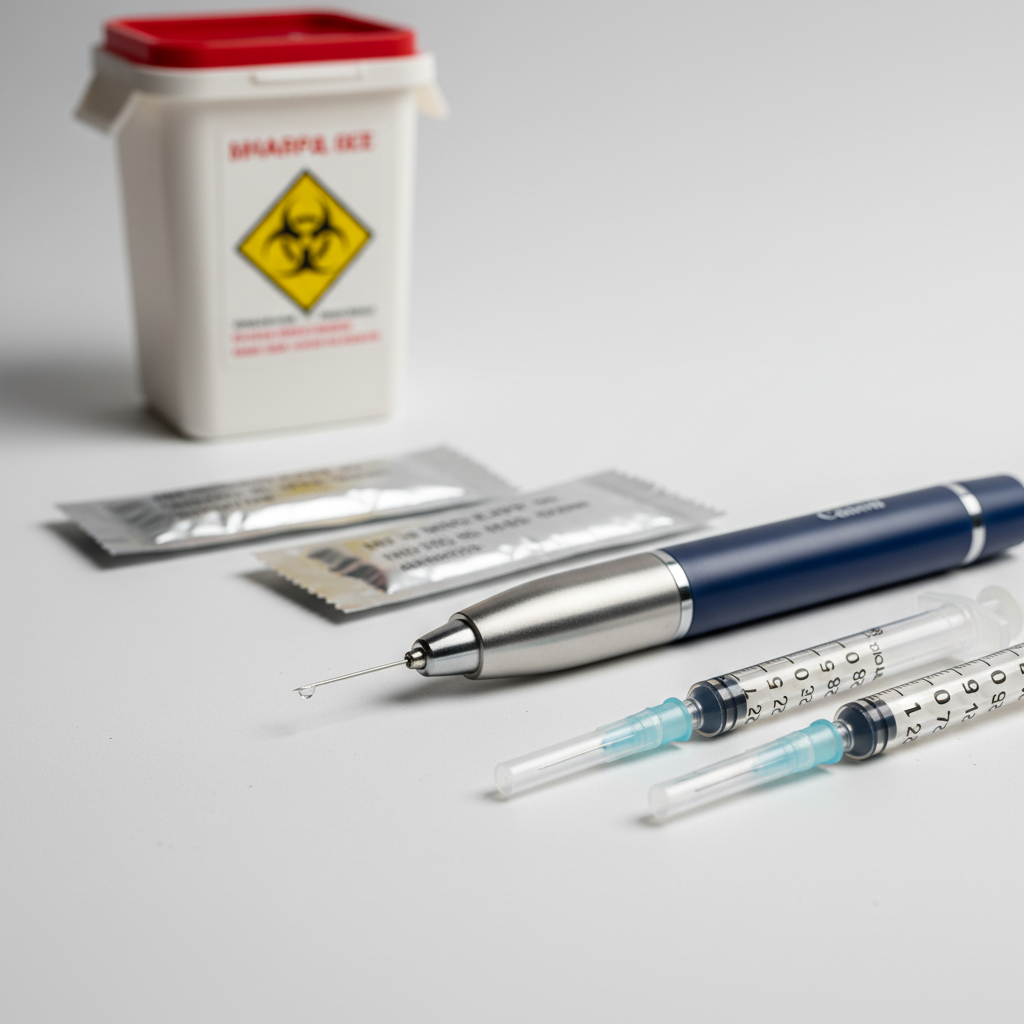
- Sharps containers are Class II devices requiring FDA 510(k) clearance — seal at three-quarters full, place for one-handed disposal, and ship mail-back waste under UN3291 and 49 CFR 173.197.
- Build par levels from your actual patient mix, not gut feel: weekly burn = (GLP-1 patients × .1) + (insulin-pen patients × doses/day × 7), with 4–6 weeks forward cover on 4 mm pen needles and a validated secondary distributor as shortage insurance.
If you manage purchasing for a med spa, weight-loss clinic, endocrinology practice, or primary care office, your injection-supply line items look very different than they did 24 months ago. Branded GLP-1 prescribing has reset pen-needle demand. The compounded GLP-1 era is winding down under FDA enforcement. OSHA’s civil penalty schedule has climbed, and the FDA’s expectations for sharps containers and disposal documentation have tightened.
This guide covers pen needles, insulin syringes, hypodermic syringes, safety-engineered devices, and sharps containers. You will learn what to buy, how much to keep on hand, and how to document it so inspectors find nothing to write up.
Why 2026 Is Different: GLP-1, OSHA, and the Shortage Layer
Three forces are reshaping injection-supply procurement this year.
Branded GLP-1 prescribing has stabilized at a sustained-high baseline. Pen-needle demand from Ozempic, Wegovy, Mounjaro, and Zepbound users is steady. This is not the compounded-vial spike many practices saw in 2023 and early 2024. It is a structural increase in 4 mm pen needle pulls that should be reflected in your par levels.
The compounded GLP-1 channel is closing. FDA declared the tirzepatide shortage resolved in October 2024 and affirmed it in December 2024. The semaglutide shortage was declared resolved in February 2025. Enforcement deadlines passed on April 22, 2025 for 503A pharmacies and May 22, 2025 for 503B outsourcing facilities. On April 30, 2026, FDA proposed to permanently exclude semaglutide, tirzepatide, and liraglutide from the 503B Bulk Drug Substances List, finding no clinical need absent a shortage. The Outsourcing Facilities Association has sued. Courts have denied preliminary injunctions. If your practice was buying compounded GLP-1, source branded product directly. Review the regulatory exposure on any continued compounded purchases with counsel.
The broader shortage picture remains active. As of mid-2026, the FDA Drug Shortages database lists approximately 76 active shortages. The ASHP shortage list reports 223 active shortages in Q1 2026 using a wider definition. Supply chain volatility is not over. It is now the planning baseline.
OSHA’s 2026 civil penalty adjustments, published by the U.S. Department of Labor, raise the cost of getting any of this wrong. We cover the figures below.
The Bloodborne Pathogens Standard and Needlestick Safety and Prevention Act
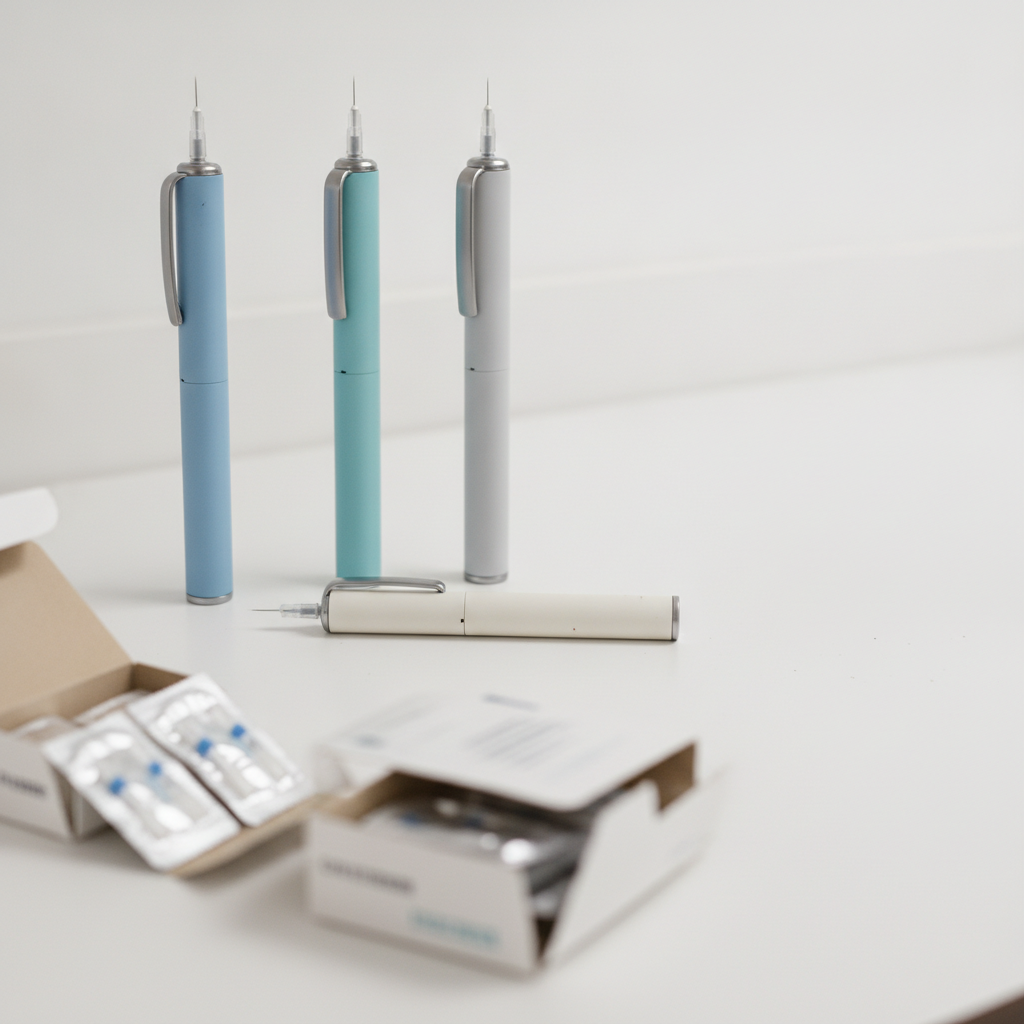
Every practice that uses needles or syringes is regulated under OSHA’s Bloodborne Pathogens Standard at 29 CFR 1910.1030. The Needlestick Safety and Prevention Act, signed November 6, 2000, amended that standard; OSHA published the revised rule on January 18, 2001, with an effective date of April 18, 2001.
You are responsible for three documents and one process:
- A written Exposure Control Plan that identifies tasks with occupational exposure to blood or other potentially infectious materials. It must list engineering controls and work practices in use. It requires annual review to reflect changes in technology and procedure.
- A sharps injury log capturing the device involved, the department or work area, and an explanation of how the incident occurred.
- Documented solicitation of non-managerial employee input on the identification, evaluation, and selection of safety-engineered devices.
- An ongoing evaluation of commercially available safer devices, with documentation of why your current selections were chosen.
These are the items an OSHA compliance officer will ask to see first.
- Serious: $16,131 per violation
- Willful (minimum $11,524): $161,323 per violation
- Repeat: $165,514 per violation
A single inspection that finds multiple uncorrected items can multiply quickly. The documentation cost is small; the citation cost is not.
Pen Needles: Match the Pen, the Patient, and the Drug
Pen needles are now your highest-velocity injection consumable in any practice prescribing GLP-1 agonists or basal insulin. The clinical evidence base has moved decisively toward shorter, finer needles.
The ADA Standards of Care in Diabetes (2026) and the FITTER expert consensus recommend 4 mm pen needles inserted at 90° for most adults regardless of BMI. This minimizes inadvertent intramuscular delivery. Children ≤6 years and adults with BMI < 19 kg/m² should pinch up a skinfold. The FITTER Forward 2025 publication in Mayo Clinic Proceedings reaffirms this guidance with additional evidence.
Sizes and Gauges
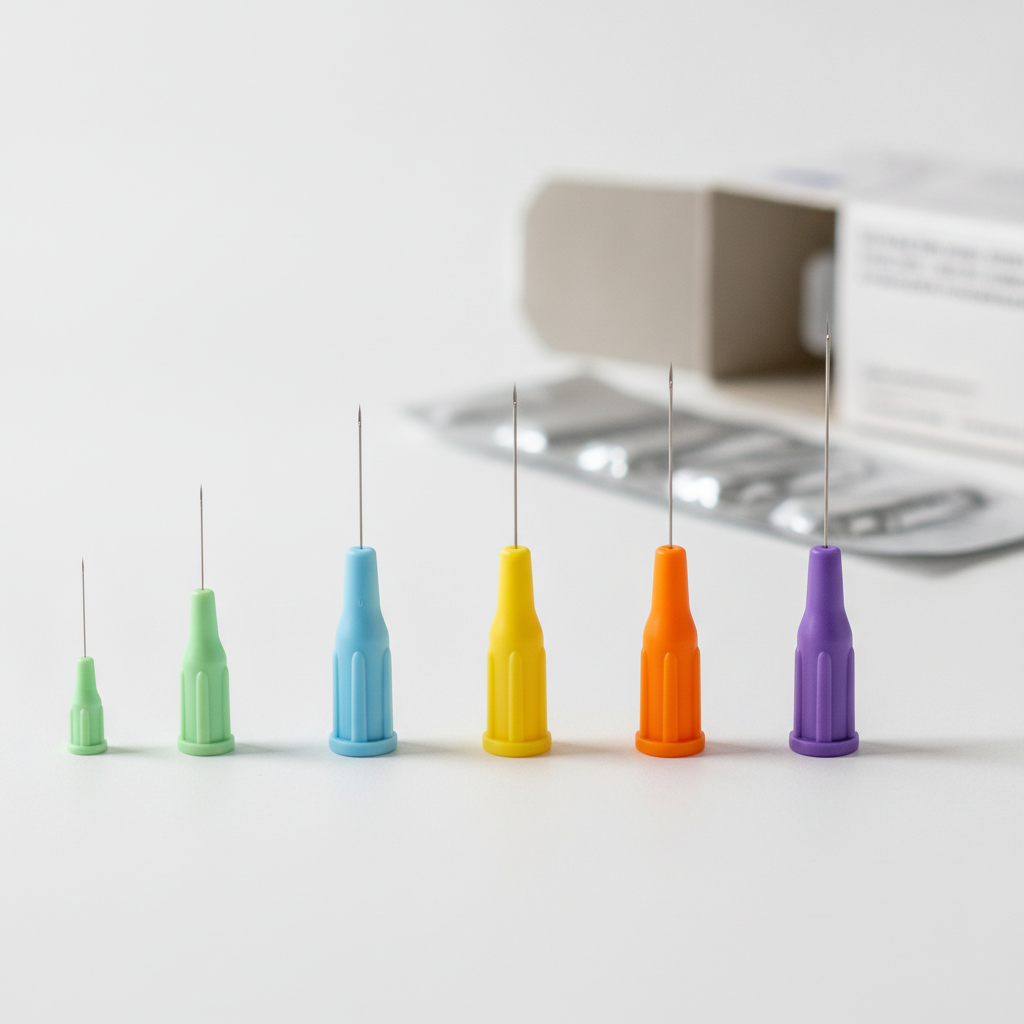
- 4 mm (32G): The ADA-preferred default for most adults, regardless of BMI.
- 5 mm (31G): Patient preference or use of legacy stock.
- 6 mm (31G–32G): Some Type 1 diabetes prescribing; clinician judgment.
- 8 mm (30G–31G): Largely deprecated for subcutaneous insulin/GLP-1 in adults.
- 12.7 mm (29G): Rarely indicated; considered legacy.
Recommended Brands
Stock the brands your prescribing clinicians write and your patients will refill. Category leaders are BD Ultra-Fine, Novo Nordisk NovoFine and NovoTwist, Owen Mumford Unifine Pentips, and validated private-label alternatives. Confirm pen compatibility before substituting — see ISO 11608-2 below.
Pen Compatibility: ISO 11608-2
ISO 11608-2:2022 specifies requirements for double-ended pen needles. The standard introduced "Type A" (interchangeable) and "non-Type A" designations. Only Type A needles are interchangeable across compatible pens. Verify Type A compatibility before assuming a needle fits any pen. Some pen manufacturers test and label only against their own branded needles.
Par Levels
For pen needles, baseline weekly burn equals (active GLP-1 patients × .1 needles per week) + (active insulin pen patients × doses per day × 7). Carry 4–6 weeks of forward cover on 4 mm 32G and 30 days on any secondary length you stock. Reduce slow-movers (8 mm, 12.7 mm) to special-order only.
Insulin Syringes
Insulin syringes remain in use for patients on vialed insulin, for cases where pen prescribing is not the modality of choice, and for select compounded products where the prescribed delivery is by syringe.
- 0.3 mL (30 units): 30G–31G, 5/16″ (8 mm). Pediatric and low-dose adult.
- 0.5 mL (50 units): 30G–31G, 5/16″ or 1/2″. Adult basal-bolus.
- 1.0 mL (100 units): 29G–31G, 1/2″ (12.7 mm). Larger doses, U-100.
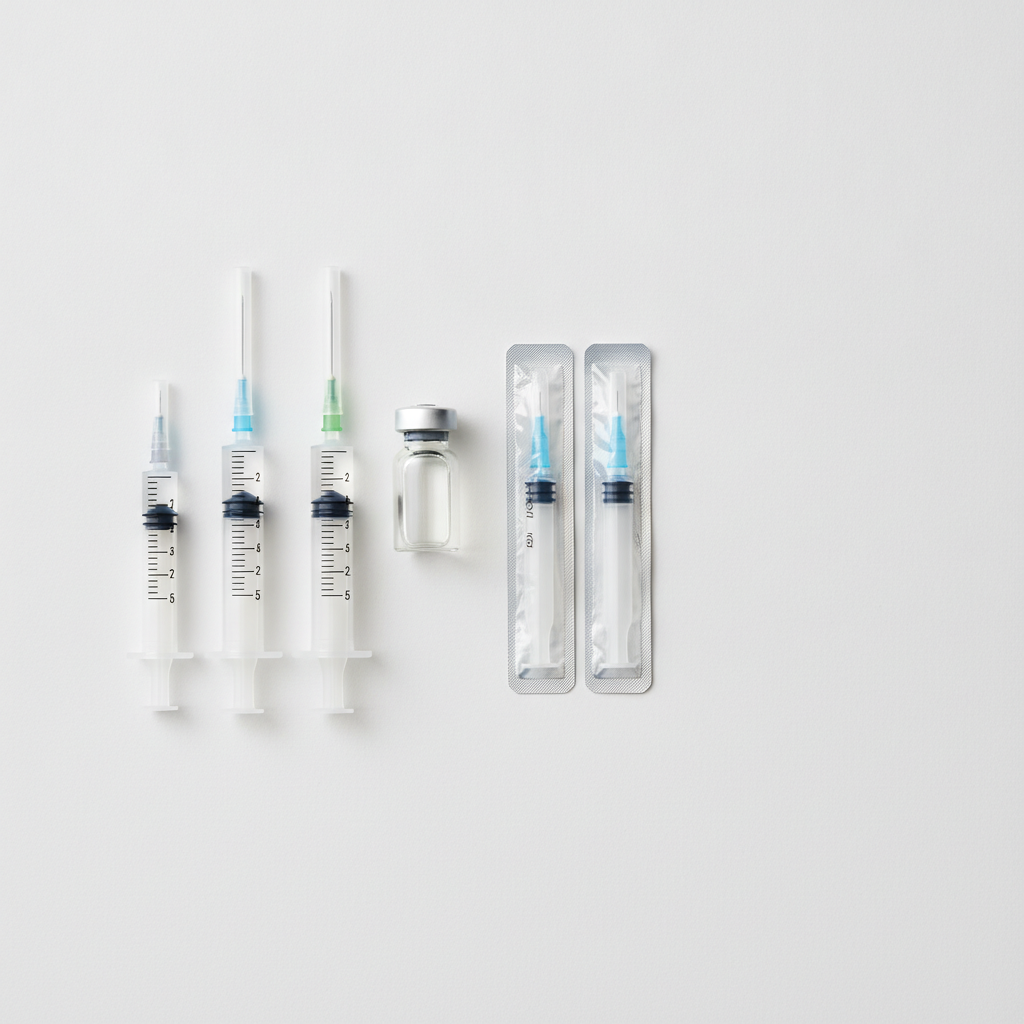
Match the syringe to the insulin concentration. U-500 requires a dedicated U-500 syringe; mixing U-500 with a U-100 syringe is a documented dosing-error pathway.
Safety-Engineered Options
Under the Needlestick Safety and Prevention Act, you must evaluate and document safety-engineered insulin syringes. Retractable and shielded options are available from BD, Terumo, Smiths Medical, and others. Document the choice between conventional and safety-engineered in your Exposure Control Plan with reference to non-managerial employee input.
The Compounded-GLP-1 Wind-Down
Practices that built insulin-syringe par levels around compounded semaglutide or tirzepatide vials should unwind that stock. Branded GLP-1 demand is sustained but dispensed in prefilled pens. These drive pen-needle consumption, not insulin syringes. Forecast insulin-syringe burn from your actual insulin patient panel, not a compounded-GLP-1 line item that FDA enforcement has closed.
Hypodermic Syringes: The Workhorse Category
Hypodermic syringes cover everything else: injectable B12, lidocaine, Botox reconstitution, joint injections, vaccine administration, IV-line aspiration. This is the category with the widest configuration range and the largest opportunity to over- or under-stock.
Selection by Procedure
- Intradermal (TB, allergy): 1 mL TB syringe, 27G × 1/2″.
- Subcutaneous (B12, vaccines): 1–3 mL syringe, 25G–27G × 5/8″.
- Intramuscular (deltoid): 3 mL syringe, 22G–25G × 1″.
- Intramuscular (gluteal): 3–5 mL syringe, 21G–23G × 1.5″.
- Joint aspiration: 10–20 mL syringe, 18G–20G × 1.5″.
- Cosmetic reconstitution: 1–3 mL syringe; 18G–21G draw, 27G–30G administration.
Luer Lock vs. Luer Slip
Luer lock is the safer default for injections involving viscous fluids, higher pressure, or disconnection risk (joint injections, reconstitution, cosmetic injectables). Luer slip is acceptable for routine low-pressure SQ and IM administration at lower cost. Set Luer lock as the procedural default. Let Luer slip cover routine vaccine and B12 work where state law or facility policy permits.
Gauge Selection
Smaller numbers are larger bores. For routine SQ, 25G–27G balances patient comfort and aspiration. For thick suspensions or synovial fluid aspiration, drop to 18G–20G. Match gauge to fluid viscosity and required depth, not a single facility default.
Tuberculin and Other Specialty Syringes
Tuberculin (TB) syringes are used for PPD testing, allergy testing, and any application requiring precise small-volume delivery. Standard configuration is 1 mL with a 27G × 1/2″ needle. Other specialty configurations you may need:
- Oral dispensing syringes (no needle hub, color-coded) for liquid oral medications — keep these visually distinct from injectable syringes.
- Irrigation syringes for wound care (typically 30–60 mL with a curved or catheter tip).
- Low-dead-space syringes for high-cost biologics where waste matters.
Safety-Engineered Devices and the OSHA Compliance Signal
The Needlestick Safety and Prevention Act amendment requires you to:
- Identify exposure-prone tasks in your Exposure Control Plan.
- Evaluate commercially available safety-engineered alternatives at least annually.
- Solicit non-managerial employee input on the selection and document it.
- Implement chosen devices and train staff on their use.
OSHA calls these "engineering controls." Safety-engineered sharps are the most visible engineering control in any outpatient practice. Inspectors look for a current Exposure Control Plan, evaluation forms for safety devices, the sharps injury log, and proof of training.
Most practices end up with a mixed inventory. Use safety-engineered devices for higher-risk procedures (blood draws, IM injections during high-volume vaccine clinics). Use conventional for low-risk repetitive use (insulin patients self-injecting under supervision, where the device leaves with the patient). The selection is yours; the documentation is mandatory.
Sharps Containers: FDA-Cleared Selection and Disposal
Sharps containers are Class II medical devices and require 510(k) clearance by the FDA. Before stocking a sharps container brand, verify the manufacturer’s 510(k) entry in the FDA’s 510(k) database. Re-labeled or unlisted containers are a compliance gap that an inspector can find in minutes.
Sizing
- 1 quart: Wall-mount in exam rooms.
- 2–3 quart: Procedure rooms, phlebotomy stations.
- 5–8 quart: Higher-volume IM/vaccine clinics.
- 12–17 quart: Central collection, infusion suites.
- Mail-back kits: Small practices, satellite sites.
Placement
Place containers as close as practical to the point of use, at a height that allows one-handed disposal without recapping. Avoid placement above sinks, below pediatric reach height, or in pathways where staff must reach across furniture.
Fill Line and Replacement
The FDA’s "Sharps Disposal Containers in Health Care Facilities" guidance recommends closing and sealing containers at approximately three-quarters full. Overfilling is a documented needlestick risk and a frequent OSHA finding. Set a standing instruction that containers are sealed at or before the 3/4 line and replaced from the supply room — do not let staff judge "almost full" on a case-by-case basis.
Disposal Vendors
Confirm your medical-waste hauler is licensed in your state, carries appropriate insurance, and provides Certificates of Destruction. Retain those certificates for the period your state requires (commonly 3 years).
DOT Shipping and Mail-Back Sharps Compliance
If you use mail-back sharps containers (common for small practices, in-home injection programs, and satellite sites), your shipments are regulated by DOT under 49 CFR, the Hazardous Materials Regulations. Regulated medical waste, including used sharps, is shipped under:
- UN3291 (Regulated Medical Waste, n.o.s.)
- Hazard Class 6.2 (infectious substances)
- Packaging Group II
- 49 CFR 173.197 (packaging requirements)
Mail-back kits from major manufacturers ship pre-tested packaging that meets these requirements. Your responsibility is to ensure containers are sealed, outer packaging is intact, and the prepaid label is used as supplied. Do not improvise outer packaging or substitute carriers.
DSCSA, HCPCS, and the Documentation Layer
Two documentation regimes affect injection-supply procurement even though they often sit with different staff.
DSCSA (Drug Supply Chain Security Act) applies to prescription drug product, not syringes and pen needles themselves. However, if your practice dispenses any drug product purchased through your supply distributor, you must capture and retain transaction information, history, and statements. Confirm your distributor provides DSCSA-compliant transaction data with every shipment.
HCPCS codes matter for billing and Medicare/Medicaid reimbursement of supplies. The two codes you will see most often on injection supplies:
- A4206 — Syringe with needle, sterile, 1 cc or less, each
- A4215 — Needle, sterile, any size, each
If you bill durable medical equipment supplies for diabetic patients or other covered populations, ensure your purchase records and patient documentation align with the HCPCS code billed. Auditors look for a clean line from purchase order to patient chart.
Stocking Strategy: Par Levels From Patient Mix
Stocking by patient mix produces tighter par levels than stocking by gut feel. Here is a worked example for a hypothetical primary care + weight management practice.
Step 1: Inventory your active patient panel by injection profile.
- 80 patients on branded GLP-1 (weekly injection)
- 40 patients on basal insulin pen (1 dose/day)
- 10 patients on basal-bolus insulin (3–4 doses/day)
- 20 vials/week of B12 administered in-clinic
- 6 IM steroid injections/week
- 4 joint aspirations/month
Step 2: Calculate weekly burn.
- Pen needles (4 mm 32G): (80 × 1.1) + (40 × 7) + (10 × 25) = 88 + 280 + 250 = 618/week
- 1 mL SQ syringes for B12: 20/week
- 3 mL IM syringes (with 22–25G × 1″ needle): 6/week + procedural buffer
- 10–20 mL syringes for joint aspiration: 1/week + buffer
- Insulin syringes: forecast from actual vialed-insulin patients only
Step 3: Apply a coverage multiplier. Carry 4–6 weeks of forward cover on high-velocity items (4 mm pen needles) and 30 days on lower-velocity items. Shorten the cover only if your distributor demonstrably ships next-day with no backorder history on that SKU.
Step 4: Set reorder triggers. Trigger at 2 weeks of cover for high-velocity items and at the minimum order quantity for lower-velocity items. Reorder at the trigger, not at empty.
Step 5: Review quarterly. Patient mix shifts. Re-pull the calculation every quarter and adjust par levels. This is the same data your distributor’s account team should be willing to model for you on request.
Multi-Source Sourcing as Shortage Insurance
The single biggest procurement vulnerability in 2026 is single-source dependence. Practices that ride out shortages best maintain:
- A primary distributor for routine ordering and contracted pricing.
- A secondary distributor validated and on-account for backorder coverage.
- A direct relationship with at least one manufacturer or master distributor for the highest-volume SKUs.
The cost of carrying a second account is low. The cost of being unable to source 4 mm pen needles for two weeks during a vaccination push or GLP-1 refill cycle is not. Multi-source sourcing is not redundancy. It is shortage insurance.
Source Your Injection Supplies From a DSCSA-Compliant Distributor
USA MedPremium is a licensed, DSCSA-compliant medical supply distributor stocking the full injection-supply line for outpatient practices — from 4 mm pen needles to FDA-cleared sharps containers. For the categories covered in this guide, that means:
- Pen needles across 4 mm–8 mm in 30G–32G, including BD, Novo Nordisk, and Owen Mumford, with Type A pen compatibility per ISO 11608-2
- Insulin and hypodermic syringes across the full volume and gauge range, in Luer lock and Luer slip, conventional and safety-engineered
- Safety-engineered devices that support your Needlestick Safety and Prevention Act evaluation and Exposure Control Plan documentation
- FDA-cleared, 510(k)-listed sharps containers from 1-quart wall units to 17-quart central collection, plus mail-back kits
Browse the full Needles & Syringes category for current SKUs and wholesale availability.
Register for a wholesale account to access tiered pricing and multi-source allocation priority on high-velocity injection consumables.
Connect with an Expert!Frequently Asked Questions
Sources
- OSHA Bloodborne Pathogens Standard, 29 CFR 1910.1030
- Needlestick Safety and Prevention Act, H.R. 5178 (Congress.gov)
- ADA Standards of Care in Diabetes (2026)
- FITTER Forward — Mayo Clinic Proceedings (2025)
- ISO 11608-2:2022 — Needles for single-use pen injectors
- FDA Drug Shortages database
- FDA — Sharps Disposal Containers in Health Care Facilities
- FDA — Drug Supply Chain Security Act (DSCSA)
- 49 CFR 173.197 — Regulated Medical Waste (Cornell LII)
- Disclaimer: This article is provided by USA MedPremium for general informational purposes only and is not medical, legal, or compliance advice. OSHA penalty amounts, FDA shortage status, and regulatory guidance change frequently — verify current details against the primary source before acting. Clinical and compliance decisions should be made by qualified professionals based on the specific facts of your practice.