How to Stock Your Practice for Diabetes Care in 2026: Injectable Insulin, Pen Needles, and the Supplies Most Facilities Forget
Takeaways:
- Pen needle selection must match each patient’s device — stock by specific gauge-and-length SKU combinations, not lumped categories.
- The ADA Standards of Care in Diabetes—2026 recommend 4mm pen needles for all adult patients regardless of BMI.
- U.S. pen adoption (15–20%) still lags Europe and Japan (66–90%) — practices under-stocking pen needles today will feel the squeeze as patient panels convert.
- DSCSA compliance is mandatory for every pharmaceutical supplier — single-source procurement is the leading cause of clinic-level stock-outs.
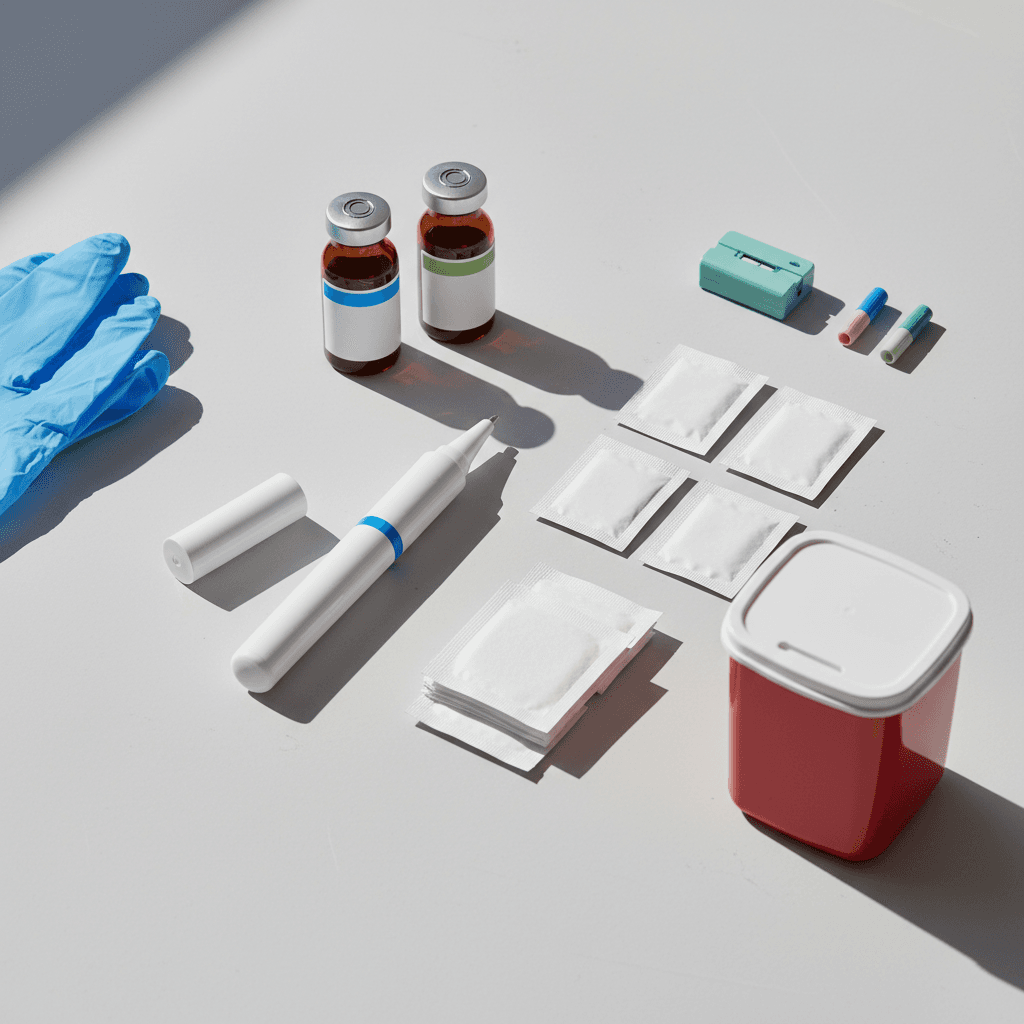
- Pen-needle-sized sharps containers, alcohol prep pads, and glucose monitoring consumables are the most consistently under-stocked ancillaries.
The Prescription Is Written. The Right Pen Needle Isn’t on the Shelf.
It happens more often than facilities like to admit. A patient arrives for an insulin adjustment. The provider writes the prescription. The nurse reaches for a pen needle — and the gauge or length doesn’t match the patient’s device. The practice ordered 31G 8mm, but the patient uses a Novofine Plus 32G 4mm. Now someone is on the phone with a supplier while the patient waits.
This guide maps the full supply footprint a medical practice, endocrinology clinic, infusion center, or home health agency needs to deliver complete diabetes care in 2026 — not just the medications, but the consumables, disposal infrastructure, and procurement discipline that keep the schedule moving.
The Scale of the Diabetes Supply Problem
According to the CDC’s National Diabetes Statistics Report, more than 37 million Americans have diabetes, and over 8.5 million require insulin therapy. The pen needle market in North America alone is valued at roughly $860 million and growing at more than 10 percent annually.
The operational gap is on the facility side. Medical practices, endocrinology clinics, infusion centers, and home health agencies consistently stock the insulin but under-stock the ancillary supplies. They carry pen needles, but only one gauge. They don’t align sharps containers with their disposal contracts. And when a patient switches devices, the workflow breaks.
Diabetes Care Is a Supply Ecosystem, Not a Single SKU
The American Diabetes Association estimates total U.S. diabetes care costs at more than $412 billion annually, with pharmaceutical spending the largest share. For the facilities treating these patients day-to-day, the cost and complexity aren’t concentrated in the medication line item. They’re in the consumables: pen needles matched to each patient’s device, syringes for vial-draw insulin, glucose monitoring supplies, sharps disposal containers, and alcohol prep pads by the box.
Most injectable insulin procurement happens at the pharmacy level, while ancillary supplies run on a separate purchasing stream — often managed by a different team or vendor. That disconnect is where the breakdown happens. The insulin is in stock; the compatible needles aren’t. The practice has insulin syringes but hasn’t ordered pen needles for patients who switched to pen delivery.
In head-to-head studies, 74 to 85 percent of patients prefer pen delivery over vial-and-syringe. Actual U.S. adoption still lags — only 15 to 20 percent of U.S. insulin patients currently use pens, compared to 66 to 90 percent in Europe and Japan — but the gap is closing as pharmacy benefit designs and prescriber defaults shift toward pens. Practices that under-stock pen needles today will feel the squeeze as their patient panel converts. A procurement approach that treats pen needles as an afterthought guarantees friction at the point of care.
How to Choose the Right Pen Needles for Your Patient Mix
Pen needle selection is not one-size-fits-all. The correct gauge and length depend on body composition, injection technique, and the insulin formulation being delivered. The table below is the working reference most procurement teams and clinical managers need on the shelf.
Pen Needle Gauge and Length Reference
- 29G: 12.7 mm
- 30G: 8 mm
- 31G: 5–8 mm
- 32G: 4 mm
- 33G: 4 mm
The American Diabetes Association’s Standards of Care in Diabetes—2026, Section 9 (Pharmacologic Approaches to Glycemic Treatment) recommends 4mm pen needles across all ages and body types to reduce the risk of inadvertent intramuscular insulin delivery. The evidence shows short needles are effective and well tolerated in adults with obesity — BMI is not a reliable predictor of appropriate needle length. This should directly shape your par-level strategy.
The Diabetes Supplies Most Facilities Forget to Stock
Beyond insulin and pen needles, these are the line items that routinely fall off the procurement list:
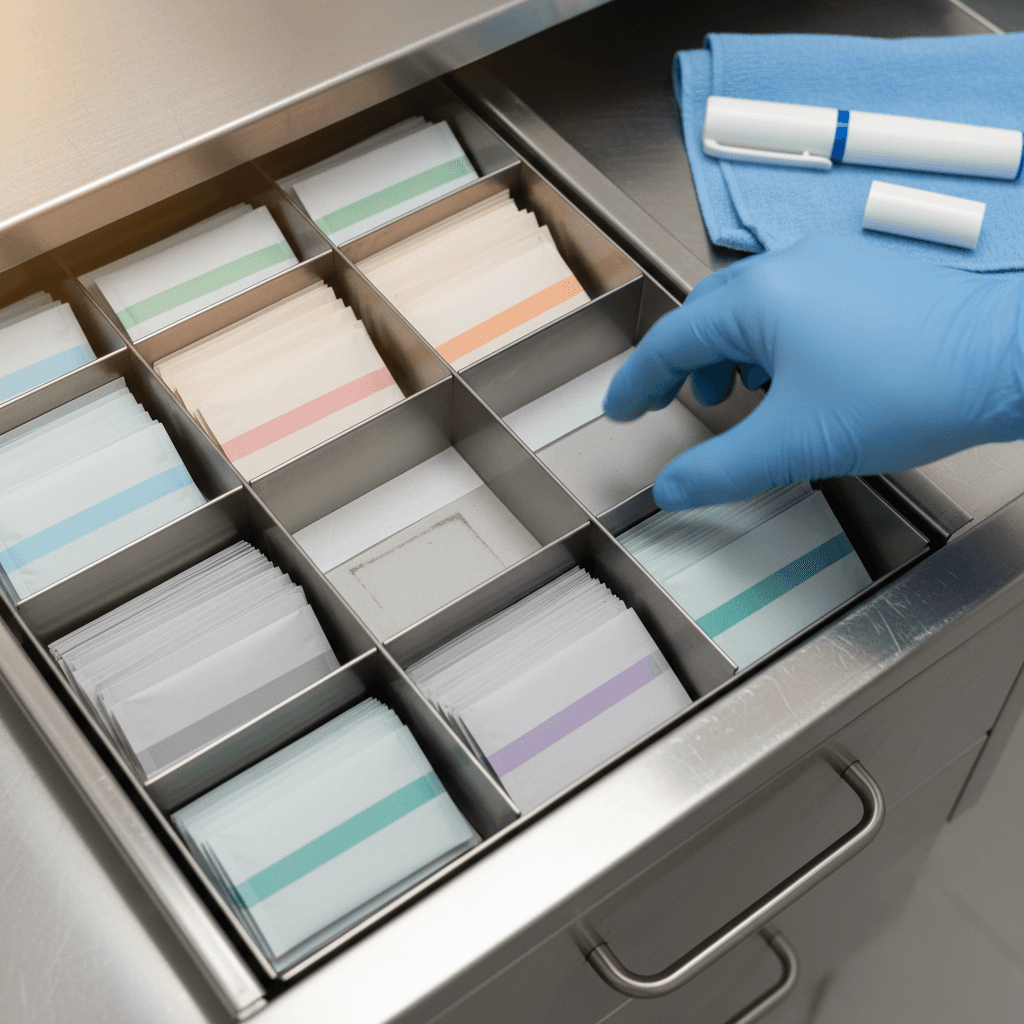
- Sharps containers sized for pen needles. Small-volume, pen-needle-specific containers are distinct from the larger syringe containers most facilities default to. Align with your disposal contract before ordering.
- Alcohol prep pads by the box. Consumed faster than projected, especially in high-volume endocrinology and infusion settings.
- Glucose monitoring supplies. Compatible test strips, control solutions, and lancets — matched to the meters your patient population actually uses.
- Pramlintide (Symlin) injection supplies. For patients on intensive insulin therapy, pramlintide is sometimes prescribed alongside insulin and requires separate syringes and storage considerations.
- Patient education materials. Injection technique handouts, sharps disposal guidance, and insulin storage instructions — standardized and kept in stock with the clinical supplies they support.
How to Build a Diabetes Supply Procurement Strategy That Doesn’t Break Down
The FDA Drug Shortage Database has tracked intermittent insulin shortages across multiple manufacturers. Eli Lilly’s Humalog vials hit backorder in 2024. Novolin R FlexPens and Fiasp FlexTouch pens have experienced supply constraints. GLP-1 medications including Ozempic and Trulicity have been on and off the shortage list since 2023.
A resilient procurement approach accounts for that volatility. The facilities that avoid stock-outs consistently apply four disciplines:
Discipline 1: Source Prescription Diabetes Medications From at Least Two Qualified Suppliers
Single-source procurement is the primary cause of clinic-level shortage events. Qualify at least two DSCSA-compliant pharmaceutical suppliers for every insulin analog and GLP-1 medication on your formulary. Your GPO contract is a starting point, not a ceiling — supplement with a specialty distributor who can cover gap SKUs when the primary channel goes on allocation. Facilities building a secondary source can review current availability in our Rx prescriptions catalog.
Discipline 2: Track Pen Needle Inventory by Gauge and Length, Not as a Single Category
A full shelf of 31G 8mm pen needles does not help the patient using 32G 4mm. Audit the last 90 days of prescriptions in your panel, then set par levels by specific gauge-and-length SKU combinations. Treat each gauge-length combination as its own line item in your ordering system — not lumped under a generic "pen needles" category that hides the real availability picture.
Discipline 3: Monitor Shortage Databases Weekly, Not Reactively
Insulin vials, FlexPens, and GLP-1 medications have all appeared on the FDA Drug Shortage Database at different points since 2023. Monitor the ASHP and FDA shortage databases weekly, and sign up for manufacturer allocation alerts from Eli Lilly, Novo Nordisk, and Sanofi. Waiting for your distributor to notify you of a backorder is a reactive strategy — the facilities that avoid stock-outs watch the upstream indicators. Facilities managing injectable shortages beyond diabetes can cross-reference our GI drug procurement guide on preservative-free famotidine and lanthanum carbonate.
Discipline 4: Verify DSCSA Compliance Before Onboarding Every Supplier
Every supplier your facility buys prescription diabetes medications from must be an Authorized Trading Partner under DSCSA. Confirm their serialization capability, EPCIS T3 data delivery method, and ATP verification process before the first PO. Suppliers who cannot produce DSCSA documentation on request should not be on your approved list — the liability follows the facility, not the distributor.
Partner with USA MedPremium for Diabetes Supply Resilience
USA MedPremium is a DSCSA-compliant, fully licensed pharmaceutical and medical supply distributor built for practices that cannot afford a gap in diabetes care. For diabetes supply specifically, that means:
- Injectable diabetes medications through our DSCSA-compliant pharmacy catalog — including insulin analogs, GLP-1 receptor agonists, and pramlintide
- Full pen needle range across every gauge and length — 29G through 33G, 4mm through 12.7mm — so you can match inventory to your actual patient panel
- Pen-needle-sized sharps containers and medical waste supplies that align with standard disposal contracts
- Glucose monitoring consumables, alcohol prep pads, insulin syringes, and the ancillary supplies that keep the workflow moving when the prescription hits the desk
We source from multiple manufacturers, maintain full DSCSA compliance with auditable chain of custody, and ship from Florida to facilities nationwide. Register free to access tiered bulk pricing and compare volume discounts before committing.
View our extended Pharmacy and prescription category and Needles & Syringes selection for the full diabetes supply footprint.
Connect with an Expert!Frequently Asked Questions
- Disclosure: USA MedPremium is a licensed medical supply distributor. This article is for informational purposes only and does not constitute medical advice. Clinical decisions regarding diabetes care and insulin therapy should be made by qualified healthcare providers. Product availability and regulatory status are subject to change.