Preservative-Free Famotidine and Lanthanum Carbonate Shortage: A 2026 Facility Buyer's Procurement Guide

Takeaways:
- Preservative-free famotidine injection is intermittently constrained in 2026, even while preserved versions remain available.
- Lanthanum carbonate (Fosrenol) backorders continue across multiple manufacturers, squeezing dialysis and nephrology programs.
- Benzyl alcohol preservatives are contraindicated in neonates because of the risk of gasping syndrome, and problematic for other sensitive populations.
- DSCSA enforcement is now fully live — every GI drug vendor must function as an Authorized Trading Partner (ATP) with serialization and full T3 data exchange.
- 503B outsourcing facilities are a legitimate fallback when commercial preservative-free inventory runs dry.
Your patient needs IV famotidine. The supplier has three versions. None of them are preservative-free. If you run a pharmacy, infusion center, dialysis facility, or outpatient clinic that handles GI patients, you have seen this before — the drug is on the shelf, but the specific formulation you need is not. This guide walks facility procurement buyers through what’s driving the 2026 preservative-free famotidine injection shortage, why lanthanum carbonate procurement keeps slipping, and how to build a GI drug supply strategy that holds up when the shelf is half-empty.
Why Preservative-Free Formulations Are a Clinical Necessity
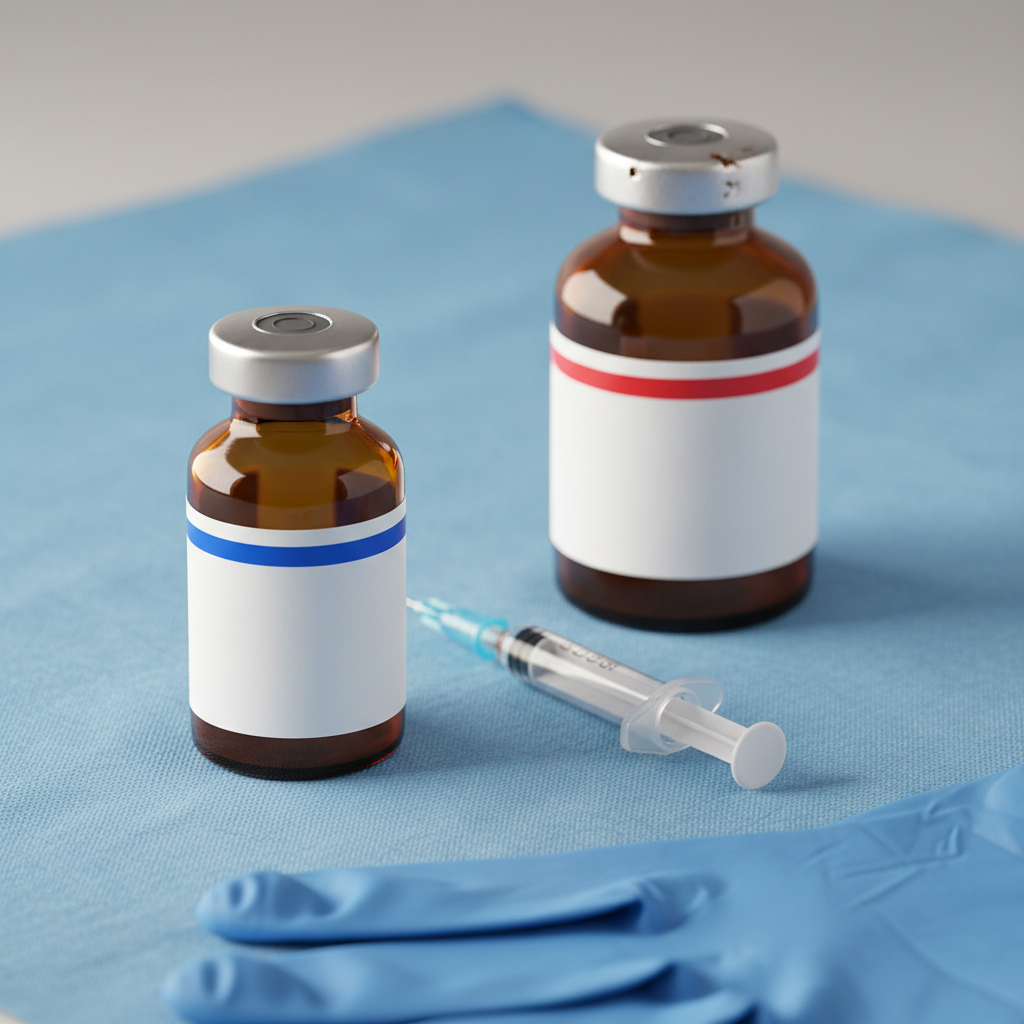
Preservative-free is not a preference. It is a clinical requirement for specific patient populations — more consequential than many procurement teams realize. Preservatives like benzyl alcohol are added to multi-dose vials to prevent bacterial contamination, but they are contraindicated for patients who cannot metabolize or tolerate them. Substituting a preserved formulation for a preservative-free order is a patient safety event, not a workaround.
Who Cannot Tolerate Preservatives
Preservative-free GI injectables are indicated when the patient profile rules out standard formulations. Procurement teams should know the populations their clinical staff will flag:
- Neonates and premature infants
- Patients with documented benzyl alcohol or paraben sensitivity
- Patients on long-term or high-volume infusion protocols where cumulative preservative exposure is a concern
- Patients with chronic kidney or hepatic impairment who metabolize preservatives poorly
- Certain pregnancy and lactation scenarios per the prescribing clinician’s judgment
Benzyl Alcohol and Gasping Syndrome in Neonates
The canonical rationale for preservative-free injectables in NICU and pediatric settings is benzyl alcohol toxicity — historically described as gasping syndrome in premature infants exposed to benzyl alcohol–preserved products. The FDA and pediatric pharmacy literature treat this as a bright-line contraindication. If your facility treats neonates or low-weight pediatric patients, preservative-free famotidine and related injectables are not optional inventory.
The 2026 GI Medication Shortage Landscape
GI drug supply pressure in 2026 is not a single shortage. It is a pattern of intermittent, formulation-specific gaps across multiple categories. The ASHP drug shortage database and the FDA drug shortage database are the two live sources procurement teams should monitor weekly. What buyers are seeing on the ground matches what those databases track: the molecule is usually available, but the specific presentation is not — preservative-free, correct vial size, correct container format.
- Famotidine injection (preservative-free): H2 blocker for stress ulcer prophylaxis, GERD, GI bleed prevention
- Lanthanum carbonate (Fosrenol): Phosphate binder for hyperphosphatemia in dialysis patients
- PEG-3350 (polyethylene glycol): Bowel prep, chronic constipation
- Docusate sodium: Stool softener
- Acarbose: Alpha-glucosidase inhibitor for post-prandial glucose control (GI-adjacent diabetic use)
Famotidine Injection Supply Status
Multiple manufacturers — Fresenius Kabi, Hikma, and Baxter among them — produce famotidine injection. But the preservative-free presentations in the specific plastic container formats that infusion centers and acute-care pharmacies order are not consistently in stock. The shortage is formulation-specific, not molecule-specific. A "famotidine injection shortage" headline can mislead facility buyers because the preserved multi-dose vial may be on the distributor shelf while the preservative-free SKU you need is on allocation. Facilities qualifying a secondary source can review current availability in our Rx prescriptions catalog.
Lanthanum Carbonate (Fosrenol) Supply Status
Lanthanum carbonate procurement has been a running problem for dialysis and nephrology programs. The brand (Fosrenol) and its generics have moved in and out of backorder through 2025 and into 2026. The root cause is upstream: lanthanum is a rare-earth element with geographically concentrated processing. When upstream supply tightens, ANDA holders cannot spin up production quickly.
PEG-3350, Docusate, and Acarbose
These are the second-tier shortages buyers should watch. PEG-3350 as a raw product is usually fine, but branded bowel prep kits go on allocation. Docusate injectable and unit-dose liquid are the fragile SKUs, while the capsule form is stable. Acarbose runs short at specific strengths, so formulary teams should check strength-level availability, not just the molecule.
Why GI Drug Supply Chains Are Uniquely Fragile
Gastroenterology drug procurement sits on top of three structural problems. None of them will resolve in 2026. Your procurement strategy must treat shortages as a permanent feature of the landscape.
A Concentrated Manufacturing Base
Most GI injectables are generics produced by a small number of manufacturers — often three to five per molecule. When one line goes offline for a quality issue, a facility upgrade, or an API interruption, there is very little redundancy. A single FDA Form 483 can tip an entire molecule into shortage. This is why the same few drug names keep reappearing on ASHP’s list. The same concentration pattern plays out across specialty injectable procurement, where fewer than 20 CDMOs globally handle commercial-scale biologic capacity.
Rare-Earth Geopolitics and Lanthanum Sourcing
Lanthanum carbonate is downstream of global rare-earth processing. China controls the majority of global rare-earth mining and the overwhelming share of refining capacity. This means lanthanum availability tracks geopolitical and trade pressures unrelated to pharmaceutical demand. U.S. ANDA holders can formulate the finished drug product, but they cannot quickly decouple from the upstream API supply chain.
Preservative-Free Production Bottlenecks
Preservative-free production is more expensive than standard production. It typically requires single-dose presentations, stricter USP <797> aseptic handling, and tighter batch release controls. Production runs are shorter, change-overs are costlier, and manufacturers prioritize the larger-volume preserved SKUs when rationing capacity. The structural result: preservative-free versions are the first to go short and the last to come back.
How to Build a Resilient GI Drug Procurement Strategy
Facility procurement teams who ride out shortages cleanly all do the same five things. Treat this as a baseline checklist, not a wish list.
Step 1: Diversify by Manufacturer
Do not rely on a single manufacturer for any critical GI injectable. Qualify at least two — ideally three — sources for famotidine injection, lanthanum carbonate, and any other high-utilization molecule. Your GPO contract (Premier, Vizient, or similar) is a starting point, not a ceiling. Supplement GPO coverage with direct wholesaler relationships and a qualified specialty distributor who can cover gap SKUs.
Step 2: Flag Preservative-Free Requirements in Your Formulary
Preservative-free is a distinct line item. Mark it that way in your formulary, order system, and backorder workflow. Purchasing teams should not have to guess whether a famotidine order can be filled with the preserved version. The formulary should answer that question before the PO goes out. This single change prevents the most common near-miss in preservative-free procurement.
Step 3: Establish Backup Suppliers for Lanthanum Carbonate
Lanthanum carbonate is the molecule most likely to leave you short in 2026. Qualify a backup supplier now, before you need one. Coordinate with clinical pharmacy on the substitution plan: phosphate binder alternatives include sevelamer (Renvela), calcium acetate (PhosLo), and ferric citrate (Auryxia). Substitution is a prescriber decision — but procurement should have the alternative-binder SKUs pre-qualified so clinical can switch without a sourcing delay.
Step 4: Verify DSCSA Compliance for Every Vendor
Every GI drug supplier your facility buys from must be an Authorized Trading Partner under DSCSA. That is not negotiable. Ask every vendor for their DSCSA serialization capability, their T3 data delivery method (EPCIS or equivalent), and their ATP verification process before you onboard. Vendors who cannot answer those questions cleanly should not be on your approved list.
Step 5: Evaluate 503B Outsourcing as a Clinical Fallback
When commercial preservative-free inventory is unavailable, a registered 503B outsourcing facility can compound preservative-free formulations to your specification. 503Bs are FDA-registered, cGMP-regulated, and operate under a different legal framework than 503A compounding pharmacies. They are a legitimate bridge for preservative-free famotidine, preservative-free heparin flushes, and similar products during commercial gaps. Qualify a 503B partner in advance so you are not scrambling under clinical pressure. For adjacent IV therapy supplies — administration sets, infusion bags, and tubing — see our IV therapy catalog.
DSCSA Compliance for GI Drug Procurement
The Drug Supply Chain Security Act (DSCSA) is now fully enforceable for trading partners. GI drug procurement falls squarely inside it. If you buy famotidine injection, lanthanum carbonate, or any other finished prescription drug product, you are a DSCSA trading partner — and so is every supplier you buy from. Treat DSCSA diligence as a hard gate, not an afterthought.
At the product level, DSCSA requires serialization at the package level using a Standardized Numerical Identifier (SGTIN) — the GTIN plus a unique serial number, lot, and expiration date encoded as a 2D data matrix. Every saleable unit must carry that identifier. The data must be electronically exchangeable between trading partners.
At the transaction level, every sale of a DSCSA-covered product requires full T3 data exchange: Transaction Information, Transaction History, and Transaction Statement. Since November 2024, that exchange must happen electronically. EPCIS messaging is the standard most trading partners have settled on. Paper-based T3 is no longer acceptable for most trading relationships.
Every entity in the supply chain must be an Authorized Trading Partner (ATP). That means a valid state license, registration with FDA where applicable, and documented ATP verification between you and each supplier. Before onboarding a vendor, confirm their ATP status, their ability to deliver serialized product with EPCIS T3 data, and their suspect-product and illegitimate-product investigation procedures. DSCSA noncompliance carries significant civil penalties and the risk of losing ATP status — which effectively removes a supplier from the legal U.S. drug distribution chain.
Partner with USA MedPremium for Resilient GI Drug Supply
USA MedPremium is a DSCSA-compliant, fully licensed pharmaceutical distributor built for facility procurement teams that cannot afford a gap. For GI drug supply, that means:
- Multi-manufacturer sourcing across famotidine injection (including preservative-free presentations), lanthanum carbonate and alternative phosphate binders, bowel prep solutions, stool softeners, and adjacent GI categories
- Authorized Trading Partner verification with serialized product, EPCIS T3 data exchange, and documented ATP status
- Pharmacy and prescription catalog coverage of the full GI procurement footprint — preservative-free injectables, branded and generic phosphate binders, PEG-3350 prep kits, and related supportive care products
- Shortage-aware allocation so when a preservative-free SKU tightens across the market, your facility gets visibility and substitution options, not a backorder email
The clinical need does not adjust to the supply chain’s timeline. Your procurement strategy has to.
View our extended Pharmacy and prescription category for the full GI procurement footprint.
Request a GI drug supply assessment from USA MedPremium to qualify us as a secondary or primary source on your preservative-free famotidine, lanthanum carbonate, and broader gastroenterology drug procurement.
Connect with an Expert!Frequently Asked Questions
- Disclosure: USA MedPremium is a licensed medical supply distributor. This article is for informational purposes only and does not constitute medical advice. Clinical decisions regarding GI therapy and formulation substitution should be made by qualified healthcare providers. Product availability and regulatory status are subject to change.