Cold Chain Integrity for Peptide Injectables: Why Your Supplier’s Logistics Decide Product Viability
Takeaways:
- Speed is not a cold chain. A peptide injectable can arrive on time, in a sealed box, and be chemically compromised — degraded product looks identical in the vial, so only a documented temperature history tells you whether it is safe to use.
- Storage conditions are part of the FDA-approved label, not a suggestion: most peptide and GLP-1 injectables require 2–8°C refrigeration and must never be frozen, with frozen product discarded even after it thaws.
- A real cold chain is governed by published standards — USP <659> defines controlled cold temperature, <1079> and <1079.2> govern storage, distribution, and how excursions are evaluated, and the CDC model sets the continuous-monitoring bar.
- A validated cold chain is five documented processes: qualified packaging, validated refrigerant, continuous data-logger monitoring, written excursion handling, and last-mile plus receiving control — each an auditable record, not a verbal assurance.
- When a supplier’s cold chain fails, the exposure transfers to you: degraded product you cannot see, no defensible proof of viability, wasted inventory, and the compliance and patient-safety liability.
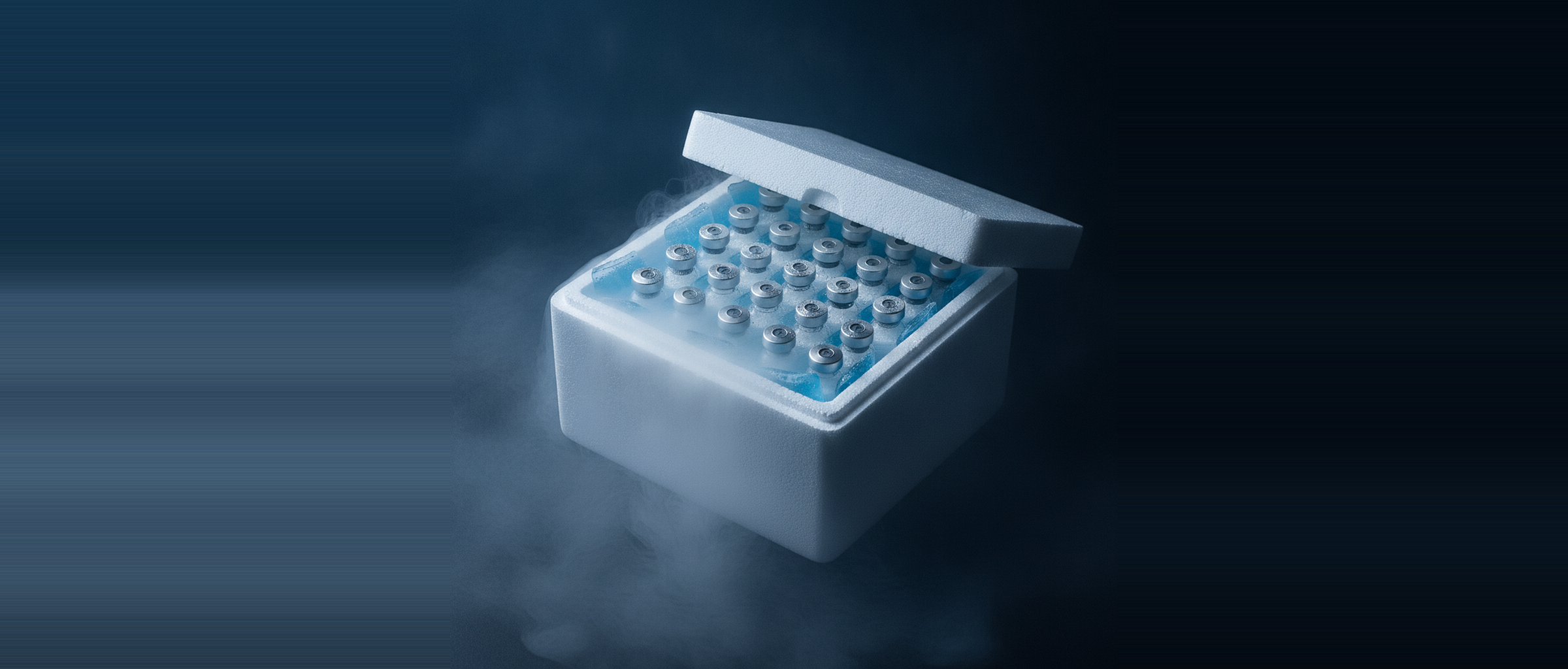
“It shipped overnight” is the most expensive assumption in healthcare procurement. Speed is not a cold chain. A peptide injectable can arrive on time, in a sealed box, and be chemically compromised before your receiving team ever opens it.
For materials managers, procurement directors, and clinic operators, the supplier’s logistics are not a back-office detail — they determine whether the product you administer is potent, safe, and defensible. This guide explains why peptides are uniquely temperature-sensitive, the standards that govern cold chain handling, and exactly what to require of any supplier before you trust them with refrigerated inventory. For the regulatory backdrop, see our guides on sourcing peptides in 2026 and 503A vs. 503B compounding.
Why Peptides Are Cold-Chain Sensitive
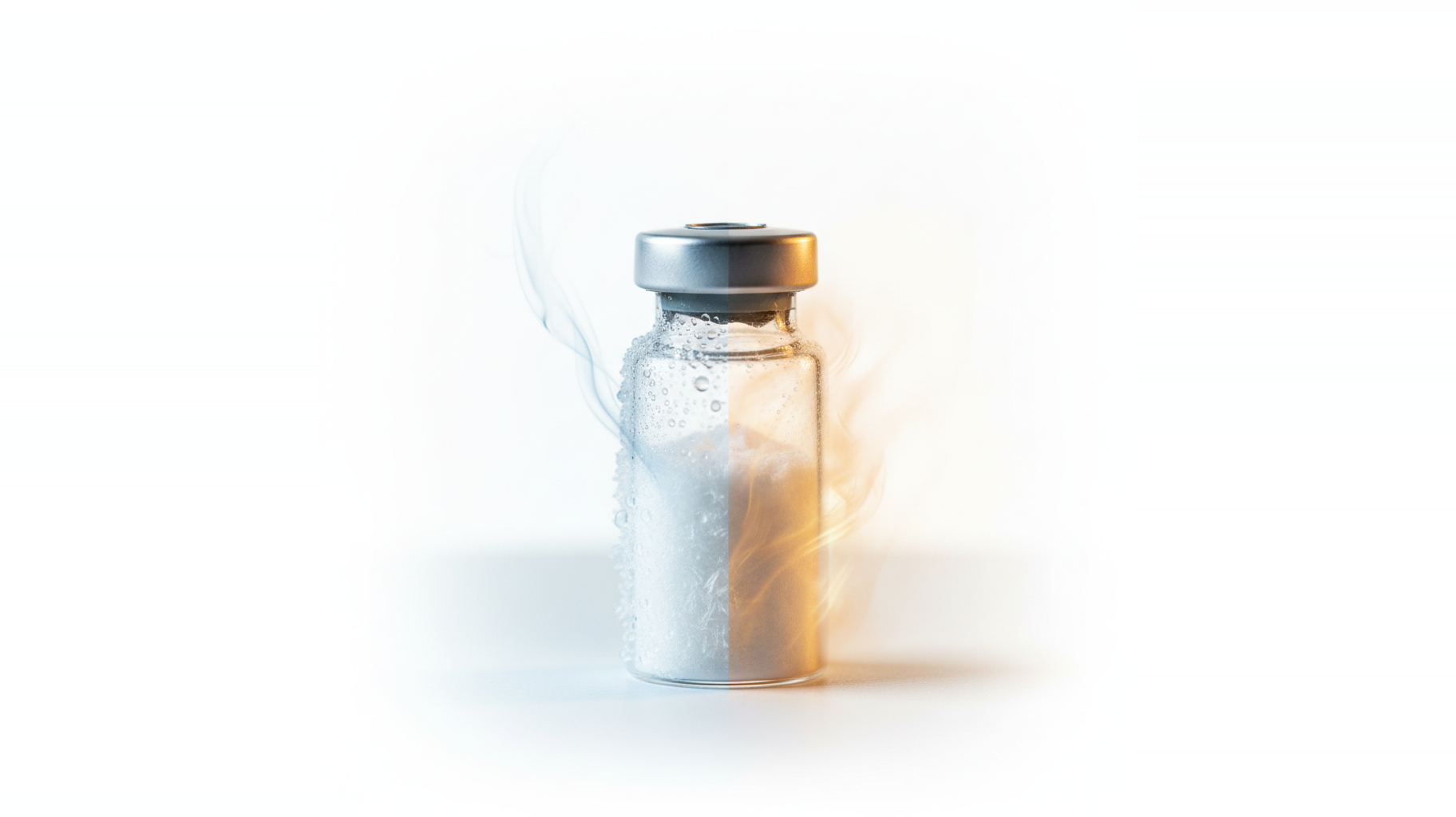
Peptides are fragile molecules. Heat and freeze-thaw cycles drive chemical and physical degradation through several pathways at once: deamidation, oxidation, hydrolysis, and — most critically — aggregation.
Aggregation is not only a potency problem. The peer-reviewed literature is direct on this point: peptide self-association “reduces the physical stability of the peptide in question, not only leading to a loss in activity but also other critical problems such as toxicity and immunogenicity,” and freeze or reconstitution cycles “can result in conformational changes leading to increased aggregation,” per a 2017 review in Interface Focus.
The practical consequences of a broken chain:
- Lost potency — under-dosing or ineffective therapy
- Particulate formation and aggregation — visible and sub-visible
- Immunogenicity risk — the immune system reacting to aggregated protein
- Irreversible damage from freezing — product must be discarded even after it thaws
A degraded injectable does not announce itself. It looks the same in the vial. Only a documented temperature history tells you whether it is safe to use.
What the Label Actually Requires
Storage requirements are not guidance — they are part of the FDA-approved label. For semaglutide, the Ozempic prescribing information is explicit.
- Before first use: refrigerate at 36–46°F (2–8°C). Do not freeze, and do not store adjacent to the cooling element.
- After first use: the pen may be kept for 56 days at controlled room temperature (59–86°F) or refrigerated. Do not freeze.
- Light protection: store in the original carton.
FDA-approved GLP-1 injectables broadly require refrigeration at 2–8°C and prohibit freezing, with product discarded if frozen. The label sets the standard your supplier’s logistics must hold the product to — across every mile, not just the warehouse.
The Standards That Govern Cold Chain Handling
A real cold chain is not improvised. It is governed by published standards that define the temperatures, documentation, and acceptable excursion limits.
USP General Chapter <659> (Packaging and Storage Requirements) defines the terms. Controlled Cold Temperature means 2–8°C maintained. Transient excursions of 2–15°C are permitted only when they do not exceed 24 hours and the mean kinetic temperature stays at or below 8°C.
USP General Chapter <1079> (Good Storage and Distribution Practices) establishes a risk-based framework for every partner from manufacturer to last-mile delivery — covering qualification, monitoring, documentation, and corrective action. See USP’s <1079> overview.
USP <1079.2> (Mean Kinetic Temperature) governs how an excursion is evaluated. It limits how MKT may be used: it cannot normalize a system with repeated excursions, which signal a chain not in control. See the USP <1079.2> chapter.
USP <797> governs beyond-use dating for compounded sterile preparations, where storage temperature is a critical input to how long a compounded product remains usable. See USP’s beyond-use dating fact sheet.
The CDC monitoring model. CDC’s vaccine storage and handling guidance is the transferable best practice for continuous monitoring: a digital data logger recording at least every 30 minutes, with temperature records retained for three years. It is not binding law for commercial peptide distribution, but it is the bar a serious cold chain meets.
Anatomy of a Validated Cold Chain
When you evaluate a supplier, you are evaluating five components. Each is a documented, validated process — not a verbal assurance.
Qualified packaging. Insulated shippers tested and validated to hold 2–8°C for the full transit window, against seasonal ambient extremes. Validation records must be available for audit.
Validated refrigerant load. Correctly pre-conditioned gel packs or phase-change materials matched to duration and season — or dry ice for frozen product. Insufficient coolant is a documented cause of summer shipping failures.
Continuous monitoring. A time-stamped data logger in each shipment producing a full audit trail — not a single-use indicator that only flags a breach after the fact.
Excursion handling. Real-time alerts, MKT evaluation against USP <1079.2>, defined quarantine and disposition rules, and corrective action for repeat excursions.
Last-mile control and receiving SOPs. The final delivery is the weakest link. FDA has received complaints that compounded GLP-1s arrived warm or with inadequate ice packs. Your receiving dock should inspect the temperature record before refrigerating — and quarantine on any breach.
“It Shipped Overnight” Is Not a Cold Chain
This is the distinction that protects your facility. Overnight speed without qualified packaging, continuous monitoring, and documented excursion handling does not preserve 2–8°C. Just as important, it provides no evidence that it did.
When a supplier’s cold chain fails, the exposure lands on you:
- You administer degraded product — with potency and immunogenicity consequences your team cannot see.
- You cannot prove viability — without a per-shipment temperature record, there is no defensible basis that the product was usable, and no data to evaluate an excursion.
- You absorb wasted inventory — product that arrived warm or frozen must be discarded.
- You inherit the liability — the compliance and patient-safety exposure transfers to the facility that stocked and used it.
A validated cold chain is not a premium feature. It is the difference between inventory you can defend and inventory you can only hope was viable.
Your Cold-Chain Due-Diligence Checklist
Require these of any supplier shipping you refrigerated peptides:
- Validated packaging. Written qualification evidence that the shipper holds 2–8°C for the full transit window, tested against seasonal extremes.
- Continuous monitoring. A data logger in each shipment — not just a threshold indicator — recording on the CDC model of at least every 30 minutes.
- Documented temperature history. A full, auditable record delivered with each shipment.
- Written excursion SOP. Defined limits, MKT evaluation per USP <1079.2>, quarantine rules, and corrective action for repeats.
- Qualified carriers and route profiling. Transport qualified for the lane — not reliance on “overnight” alone.
- Validated refrigerant. Correct, pre-conditioned coolant matched to duration and season; dry ice with proper documentation for frozen product.
- Standards alignment. Demonstrated operation to USP <659>, <1079>, and <1079.2> — and USP <797> for compounded product.
- Your own receiving SOP. Inspect the temperature record before storing, quarantine on breach, and retain the history per shipment.
How USA MedPremium Protects Cold-Chain Integrity
USA MedPremium operates one platform built to the standard healthcare itself is held to — the supply chain that never compromises.
- Engineered for time-sensitive product. 99.9% on-time delivery for time-sensitive medications, and a 99.5% on-time shipment rate across all orders.
- Documentation on demand. Auditable handling records and DSCSA-compliant chain of custody on every FDA-approved product we distribute.
- Certified and compliant. LegitScript and FDA certified, with a zero-tolerance compliance posture.
- Allocation integrity. The Ethical Allocation Program manages shortages with real-time data, so time-sensitive inventory reaches you when it matters.
- Real accountability. Named account representatives and 24/7 support — one point of contact who can produce handling records when you need them.
The result is a procurement relationship trusted by 500+ healthcare organizations and 5,000+ verified buyers across 73+ facility types.
Source With Confidence
A peptide injectable is only as viable as the cold chain that delivered it. Your facility should never have to assume the product was kept at temperature. It should have the record that proves it.
Register a free business account to access the full pricing matrix. Or contact our procurement team for a 15-minute sourcing and cold-chain review tailored to your facility. Fortify your supply chain before your next shipment — not after a failed one.
Connect with an Expert!Explore the catalog directly:
Frequently Asked Questions
Related reading:
- Sourcing Peptides in 2026: Why Supply Chain Integrity Is a Procurement Decision
- 503A vs. 503B Compounding: What Every Clinic Buyer Must Verify
- Growth Hormone Pen Sourcing: 2026 Practice Buyer’s Guide
Authoritative Sources
- FDA — Ozempic (semaglutide) Prescribing Information (storage requirements)
- FDA — FDA’s Concerns with Unapproved GLP-1 Drugs Used for Weight Loss
- CDC — Vaccine Storage and Handling (cold chain and continuous monitoring model)
- USP — General Chapter <1079> Good Storage and Distribution Practices for Drug Products
- USP — General Chapter <1079.2> Mean Kinetic Temperature
- USP — Beyond-Use Dating Fact Sheet (USP <797>)
- Interface Focus (2017) — Factors Affecting the Physical Stability (Aggregation) of Peptide Therapeutics
- Disclosure: USA MedPremium is a licensed medical supply and pharmaceutical distributor. This article is provided for informational purposes for healthcare procurement professionals and does not constitute legal, regulatory, or clinical advice. Always verify the labeled storage and handling requirements for any specific product before purchase and administration.