The Profitable IV Menu: How to Build, Price, and Source for Real Margin in 2026
Takeaways:
- Model net margin, not gross. Supplies run roughly 10–15% of the service price, but once you add rent, nursing labor, medical direction, and marketing, fixed-clinic net margins land closer to 20–40% — treat “50–80% profit” claims with skepticism.
- Architect the menu in two tiers: a few accessible anchor drips (basic hydration, Myers’-style cocktail) that drive volume, plus premium add-ons (NAD+, glutathione, vitamin pushes) that carry the margin. Bundling add-ons is the single biggest lever on per-visit revenue.
- Price on value, then lock in recurring revenue. A premium experience supports a premium price; racing to the bottom destroys margin. The membership segment is the fastest-growing slice of the market (%+ CAGR) and turns walk-ins into a forecastable revenue base.
- Source to protect margin and your license. Use 503B outsourcing facilities for compliant office-use stock (where your state allows), respect USP <797> beyond-use dating, trade only with DSCSA-licensed partners, and vet suppliers for sterility and warning-letter history.
- Name the menu inside FTC limits. The FTC requires competent, reliable scientific evidence for health claims and has acted against IV providers making disease-treatment claims — name drips around ingredients and experience. And budget for the provider exam and medical director your state requires.
Most IV menus are built backwards. Owners copy a competitor’s list, mark up the bag, and hope volume covers the rent. The clinics actually printing profit in 2026 do something different: they engineer the menu — anchor drips that fill chairs, premium add-ons that carry the margin, and a sourcing strategy that protects both.
The category rewards getting this right. The IV hydration market is projected to grow from roughly $2.83 billion in 2025 to $5.66 billion by 2033 (directional), and the fastest-growing slice is memberships, expanding north of 11% a year (directional). Here’s how to build a menu that captures it.
For adjacent decisions, see our 2026 IV therapy sourcing playbook, scaling mobile and membership IV models, adding NAD+ as a premium service, and the longevity IV compliance playbook.
Understand the Real Margin Math
The reason IV therapy looks so attractive is simple: the cost of goods is a small fraction of the price. Operator sources put supplies at roughly 10–15% of the service price. A hydration drip that costs you a modest amount to assemble can retail for $100–$200+.
But don’t confuse gross margin with what you keep. Once you add rent, nursing labor, medical direction, and marketing, net margins land closer to 20–40% for fixed clinics (directional, synthesized across operator sources). Treat the “50–80% profit” claims floating around the internet with healthy skepticism — they almost always ignore overhead.
The lesson: your menu architecture, labor model, and sourcing — not the price of the saline bag — decide whether you’re actually profitable.
Architect the Menu in Two Tiers
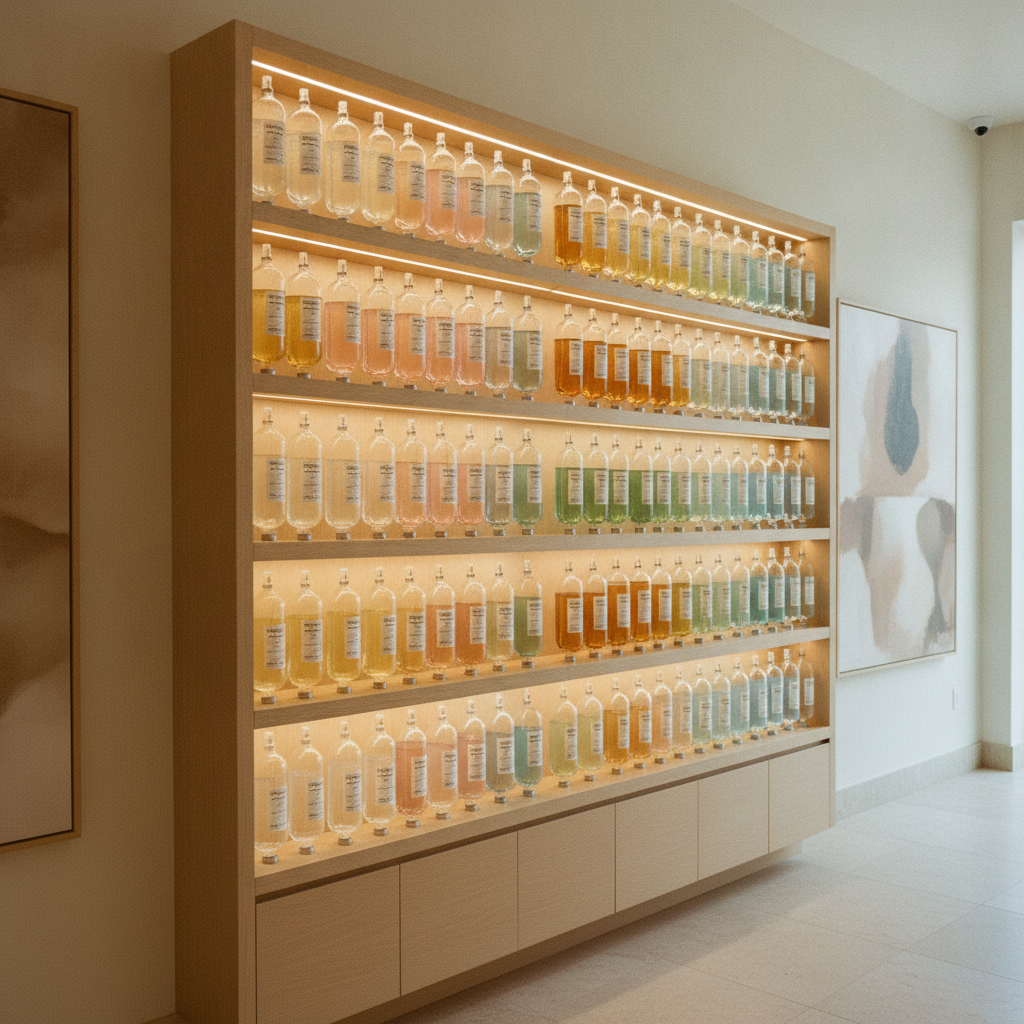
A profitable menu is deliberately simple. Complexity kills bookings and complicates your inventory.
Tier 1 — Anchor drips (volume). Accessible, fast-moving, easy to staff:
- Basic hydration / saline + electrolytes — typically $79–$250
- Myers’-style vitamin cocktail — typically $150–$400
- A clean “recovery” or “wellness” base
These anchor drips bring people in the door.
Tier 2 — Premium add-ons (margin). Higher price, longer chair time, real differentiation:
- NAD+ infusions — frequently $350–$1,000+
- Glutathione, high-dose vitamin C, and targeted “boost” injections bundled onto an anchor drip
Industry coverage consistently names NAD+ and glutathione as the highest-margin add-ons — and bundling is the single biggest lever on per-visit revenue in a booming vitamin-IV category. With the average U.S. session reported around $280 (directional industry figures), every add-on you attach moves you above the mean.
Price on Value, Then Lock In Recurring Revenue
Don’t price off a cost-plus markup — price off positioning. A premium, professional experience supports a premium price; racing competitors to the bottom destroys the margin that makes the business work.
Then capture recurring revenue, because the membership segment is growing fastest for a reason:
- Cost-per-drip memberships trade a modest discount for predictable monthly revenue and higher visit frequency.
- Seasonal and bundled packages smooth cash flow and lift retention.
Memberships convert one-time walk-ins into a forecastable revenue base — which also makes your inventory planning dramatically easier.
Source to Protect Margin and Your License
This is the part generic “IV is profitable” articles skip — and it’s where margin quietly turns into liability if you get it wrong.
- 503A vs. 503B. 503A pharmacies require patient-specific prescriptions and can’t batch for office use. For ready-to-administer office stock, 503B outsourcing facilities are the federally compliant route — but your state board can restrict office-use compounding even when federal law allows it, and “other IV bars do it” is not a defense.
- USP <797> beyond-use dating. Sterile preparations have strict beyond-use dates driven by the compounding environment — so you can’t pre-mix the week’s drips and store them indefinitely. This is a real formulary-planning constraint.
- DSCSA. A clinic that buys and administers prescription drugs is a “dispenser” and must trade only with licensed partners. Full track-and-trace obligations phase in through November 27, 2026 — so vet your vendors now.
- Vet for sterility history. The FDA issued 2024–25 warning letters to compounders for insanitary conditions and sterility failures, including large recalls. Who you source from is a patient-safety and liability decision, not just a price decision.
Name the Menu Carefully — the FTC Reads Menus Too
How you describe a drip is regulated. The FTC requires competent and reliable scientific evidence for health claims, and it has acted against IV providers — including a Texas hydration bar ordered to stop claiming its cocktails treat serious diseases. Name drips around the experience and ingredients — not disease treatment.
And remember the labor side: most states require a provider’s good-faith exam and order before administration, and many require a medical director. That structure is both a compliance requirement and a real cost line in your margin model.
Your Profitable-Menu Checklist
- Two tiers: a few accessible anchor drips + premium high-margin add-ons.
- Model net margin, not gross — include labor and medical direction.
- Bundle add-ons to lift the average ticket above ~$280.
- Launch a membership to capture recurring revenue and ease inventory planning.
- Confirm 503A/503B sourcing for every injectable, per your state board.
- Respect USP <797> beyond-use dating in your prep workflow.
- Use DSCSA-licensed, sterility-vetted suppliers.
- Name and market the menu inside FTC limits.
Build a Menu That Protects Your Margin — and Your License
USA MedPremium supplies licensed clinics and med spas with traceable, compliantly sourced IV ingredients and supplies — ready-to-administer, DSCSA-compliant, and vetted for quality — so your margin never becomes a liability. Stock your program from our IV Therapy and Pharmacy categories.
Register for a wholesale business account to view pricing and build your formulary, or contact our procurement team to plan compliant supply for your menu.
Connect with an Expert!Frequently Asked Questions
Related reading:
- The 2026 IV Therapy Sourcing Playbook: How Compliant Clinics Buy Smarter
- Mobile & Membership IV: The Two Models Driving Clinic Growth in 2026
- NAD+ IV Therapy: The Premium Service Behind 2026’s Highest Margins
- The Longevity IV Boom: How to Ride It Without Risking Your License
Sources
- Grand View Research — Intravenous Hydration Therapy Market Report
- Research and Markets — Intravenous (IV) Therapy Membership Global Market Report 2026
- Inc. — Shoot It Into My Veins: What’s Fueling the Vitamin IV Craze
- U.S. FDA — Hospital and Health System Compounding Under Section 503A
- The FDA Group — 503A vs. 503B Compounding Pharmacies
- U.S. Pharmacopeia — General Chapter <797> Sterile Compounding
- U.S. FDA — Drug Supply Chain Security Act (DSCSA)
- U.S. FDA — Warning Letter, Empower Pharmacy (April 2, 2025)
- U.S. FTC — Health Claims
- American Med Spa Association — Update to Laws Regarding IV Therapy in Medical Spas
- Disclaimer: This article is for informational purposes only and is intended for licensed B2B purchasers — it is not medical, legal, or regulatory advice. Requirements vary by state and change over time, so verify all sourcing and compliance practices with your own counsel and licensing authorities. No product referenced is claimed to diagnose, treat, cure, or prevent any disease.